A new water calibration for glasses, from rhyolite to mantle peridotite
Measuring water in a silicate glass by infrared spectroscopy means converting how much light the glass absorbs into an actual water content. That conversion factor, the molar absorption coefficient, changes with glass composition. Until now it had only been calibrated for relatively polymerized glasses, from rhyolite to basanite.
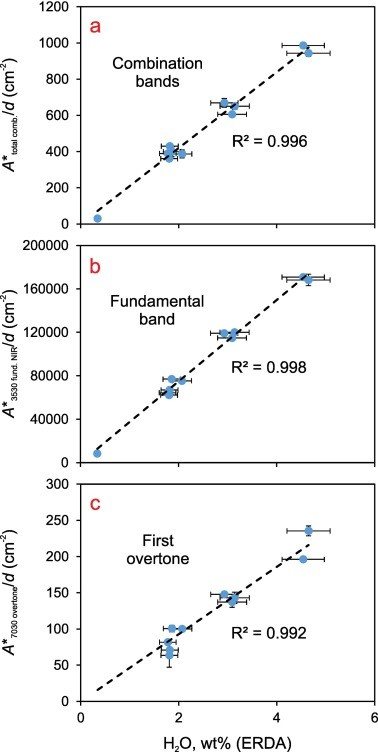
Our new study (Bondar et al. 2026, Chemical Geology) extends the calibration to highly depolymerized peridotitic glasses, the closest lab analogue to mantle melts. We measured absolute water content with elastic recoil detection analysis, a direct nuclear method that works independently of the glass's chemistry, and compared the results against a database of over 350 published values we compiled and critically assessed, the largest of its kind.
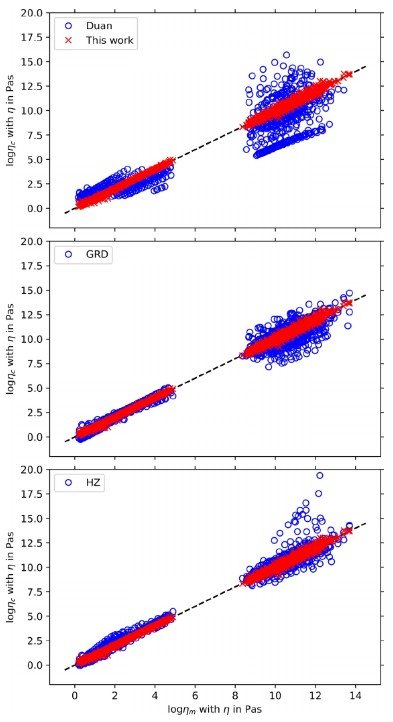
Molar absorption coefficients for all four water-related infrared bands correlate tightly with SiO2 content, with R² up to 0.998 across the full range from rhyolite to peridotite. That means water content in silicate glasses, from silica-rich volcanic melts to the depolymerized compositions relevant to the mantle and magma oceans, can now be measured accurately by FTIR using a single, composition-dependent calibration.
Read the paper ↗