Here you will find the tools developed and presented in our studies.
Open access tool: calculate volcanic melt viscosity from composition (MELVIS)
We introduce MELVIS (MELt VIScosity), a new open-access web application developed at the GLASS laboratory (CNR-ISSMC, Rome) for modelling the viscosity of volcanic melts directly from major-element compositions. The platform combines ANN-based MYEGA viscosity calculations, volatile-dependent rheological modelling, and composition-specific calibrations derived from experimental datasets in recent literature. MELVIS runs entirely in the browser, requires no installation, and generates publication-ready figures and formatted Excel outputs from simple CSV inputs. The application is currently under active development, with additional melt properties and extended volatile modelling planned for future releases.
A graphical abstract is available.
MELVIS — MELt VIScosity
New free, open access tool: calculate volcanic melt viscosity from composition (MELVIS).
Dominijanni et al. 2026. A viscosity model for anhydrous and hydrous phonotephritic melt. Here is the viscosity calculator.
Modeling magma viscosity and ascent dynamics of the 472 CE sub-Plinian eruption of Somma-Vesuvius (Italy)
An Excel calculator for calculating the viscosity of phonotephritic melt is available in the Supporting Information.
Stopponi et al. 2026. A viscosity model for metaluminous and peralkaline haplogranitic melts. Here is the viscosity calculator.
Viscosity and structure of Na2O-enriched haplogranitic melts: a DSC shift-factor calibration for peralkaline rhyolites
An Excel calculator for calculating the viscosity of metaluminous and peralkaline haplogranitic melts is available in the Supporting Information.
Fanesi et al. 2025. A viscosity model for anhydrous and hydrous tephriphonolite melt. Here is the viscosity calculator.
A review of the differential scanning calorimetry shift–factor approach: Application to Colli Albani melt viscosity and implications for mafic Plinian eruptions
An Excel calculator for calculating the viscosity of anhydrous and hydrous tephriphonolite melt is available in the Supporting Information.
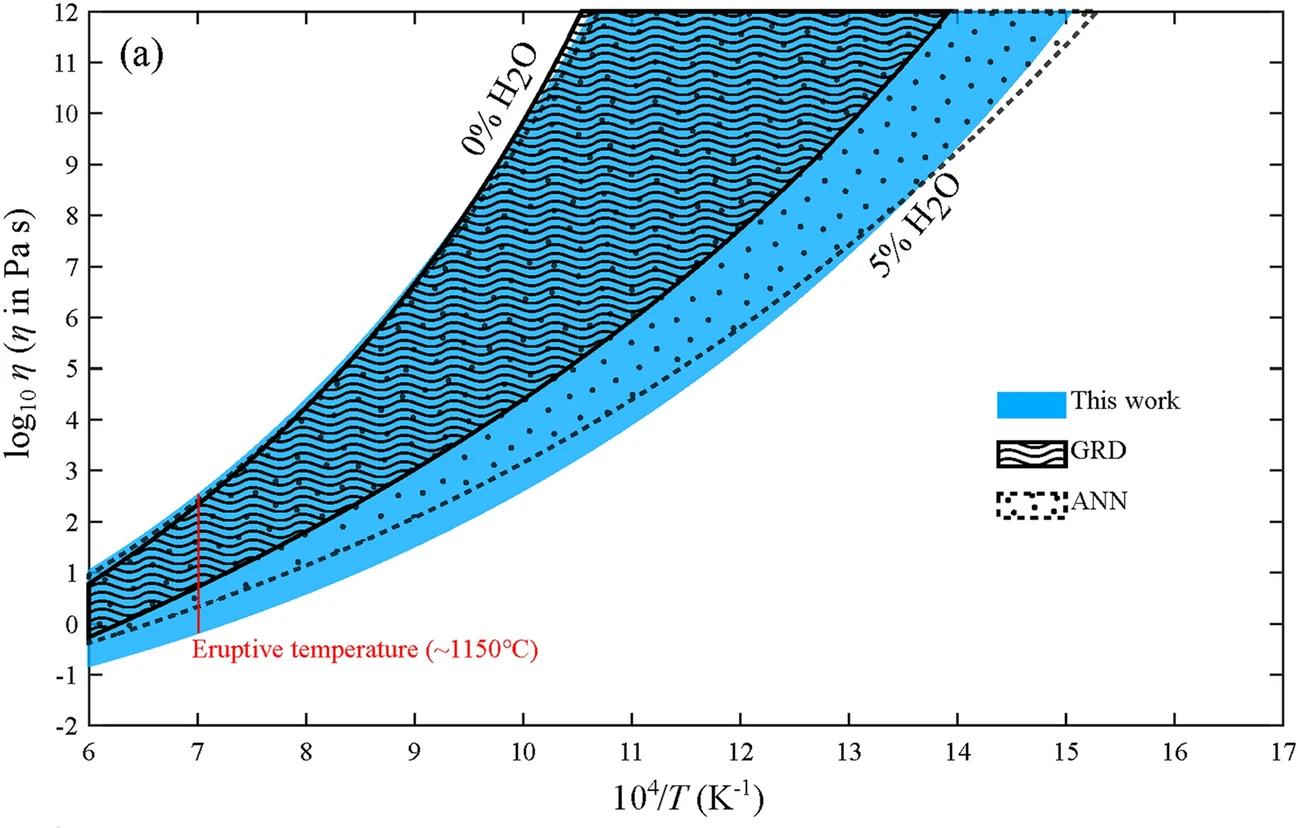
Valdivia et al. 2025. A viscosity model for anhydrous andesite. Here is the viscosity calculator.
Nanoscale chemical heterogeneities control the viscosity of andesitic magmas
An Excel calculator for calculating the viscosity of anhydrous andesite melt as a function of transition metals content is available in the Supporting Information.
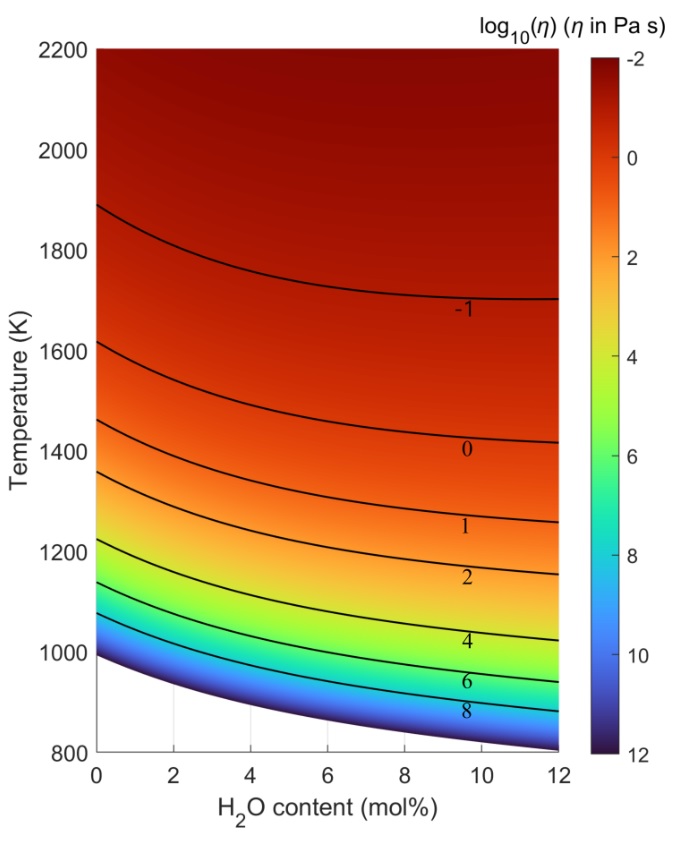
Valdivia et al. 2023. A viscosity model for anhydrous and hydrous Stromboli basalt. Here is the viscosity calculator.
Are volcanic melts less viscous than we thought? The case of Stromboli basalt
An Excel calculator for calculating the viscosity of anhydrous and hydrous Stromboli melt is available in the Supporting Information.
Di Genova et al. 2023. A viscosity model for anhydrous and hydrous peridotite melt. Here is the viscosity calculator.
Viscosity of anhydrous and hydrous peridotite melts
An Excel calculator for calculating the viscosity of anhydrous and hydrous peridotite melt is available in the Supporting Information.
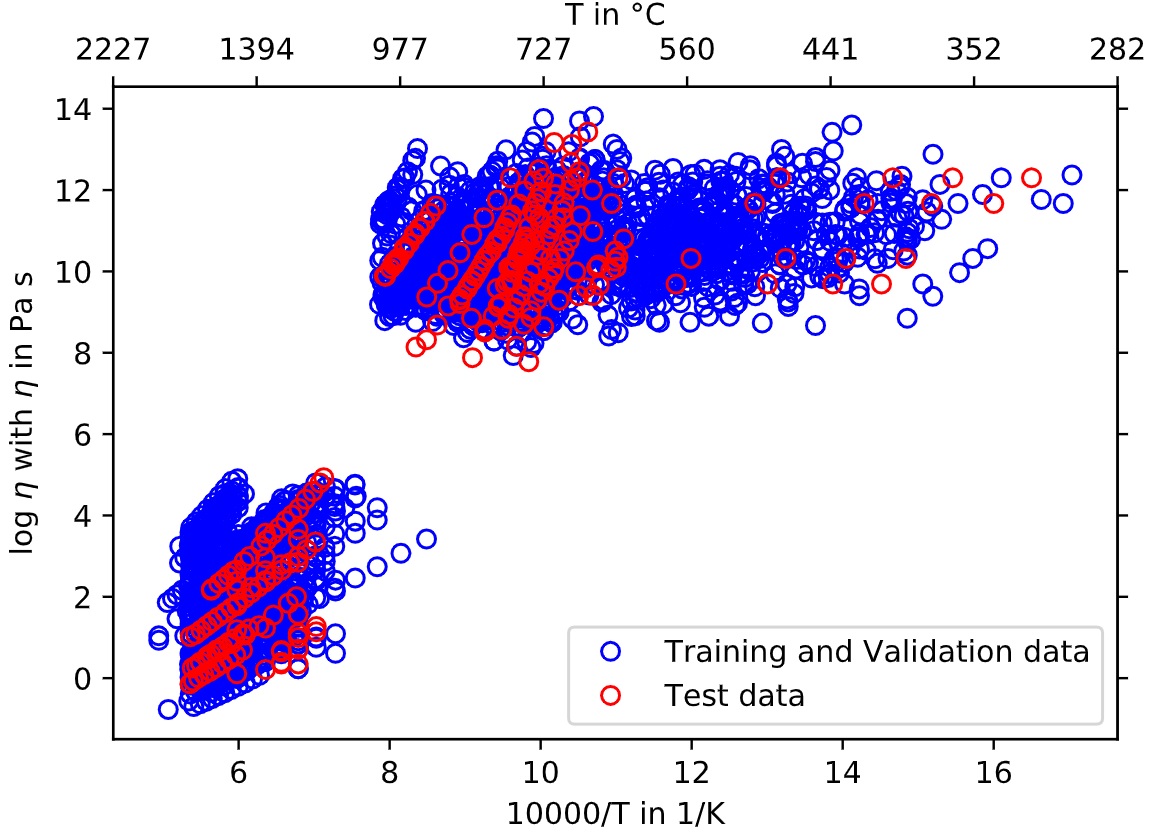
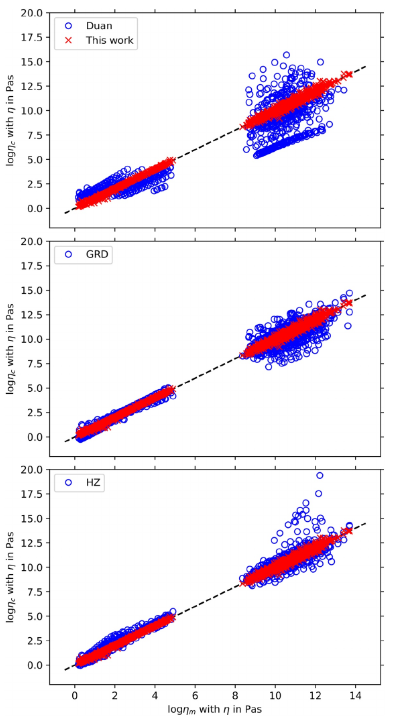
Langhammer et al. 2022. A global viscosity model. Here is the online viscosity calculator.
Modeling Viscosity of Volcanic Melts With Artificial Neural Networks
This interface allows the viscosity of a volcanic melt to be calculated using the chemical composition of the melt.
Langhammer et al. 2021. Single viscosity model for a single composition.
Modeling the Viscosity of Anhydrous and Hydrous Volcanic Melts
An Excel calculator for calculating the viscosity of volcanic melts is available in the Supporting Information. This tool is chemical composition independent, i.e. it provides the viscosity of a compositional domain from literature data for the same domain.