Skip to content
August 2026. A new water calibration for glasses, from rhyolite to mantle peridotite
Measuring water in a silicate glass by infrared spectroscopy means converting how much light the glass absorbs into an actual water content. That conversion factor, the molar absorption coefficient, changes with glass composition. Until now it had only been calibrated for relatively polymerized glasses, from rhyolite to basanite.
Our new study (Bondar et al. 2026, Chemical Geology) extends the calibration to highly depolymerized peridotitic glasses, the closest lab analogue to mantle melts. We measured absolute water content with elastic recoil detection analysis, a direct nuclear method that works independently of the glass’s chemistry, and compared the results against a database of over 350 published values we compiled and critically assessed, the largest of its kind.
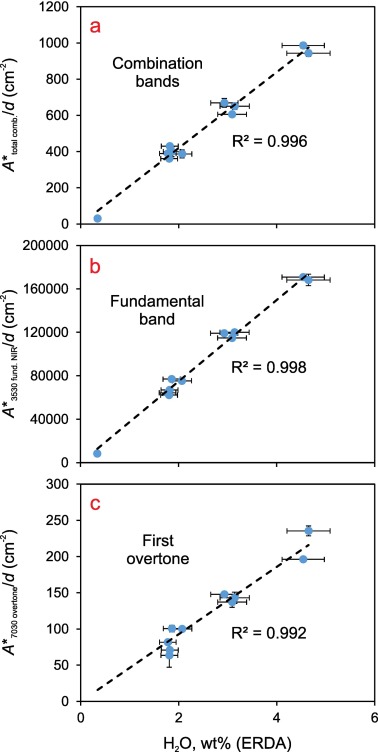
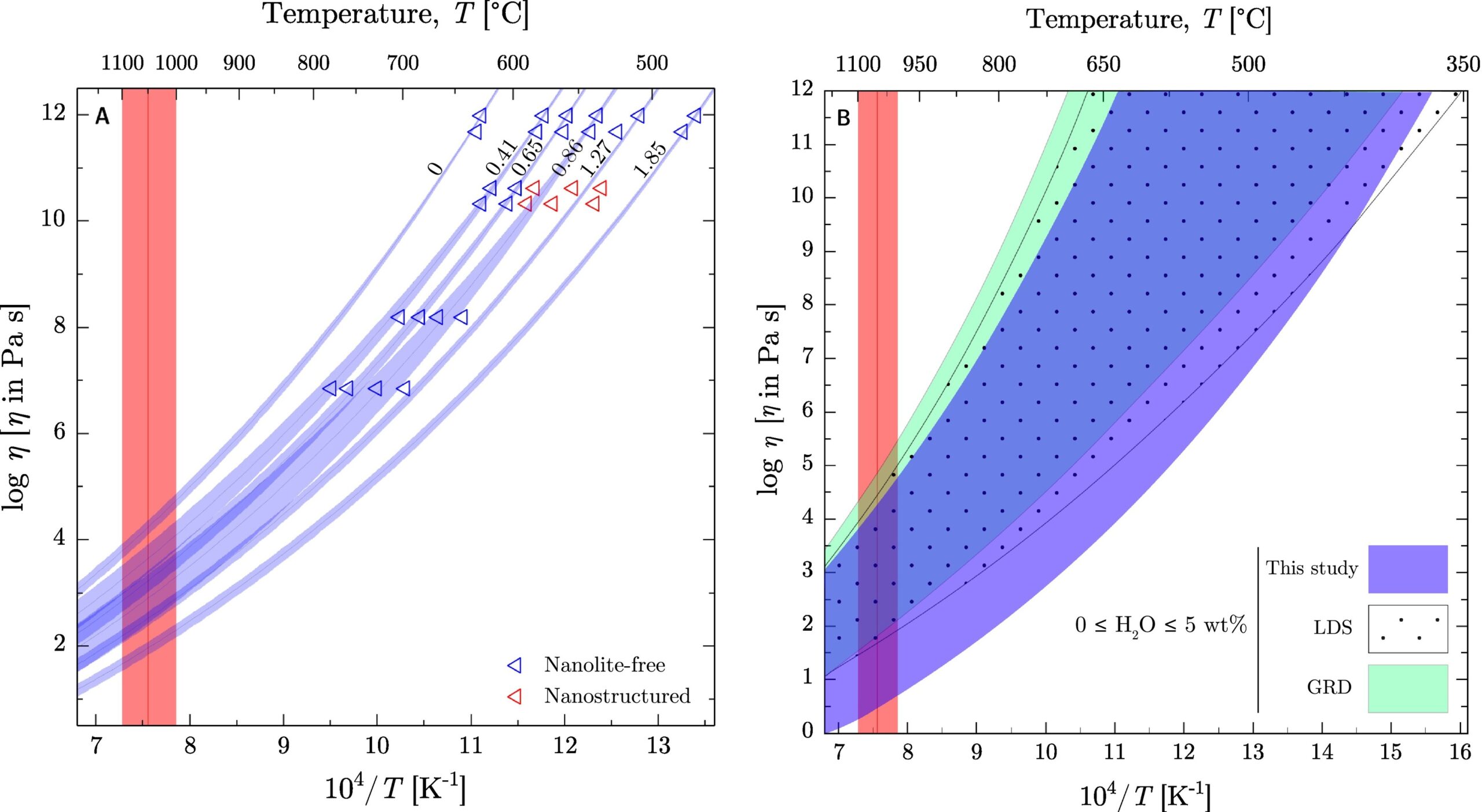
Molar absorption coefficients for all four water-related infrared bands correlate tightly with SiO2 content, with R² up to 0.998 across the full range from rhyolite to peridotite. That means water content in silicate glasses, from silica-rich volcanic melts to the depolymerized compositions relevant to the mantle and magma oceans, can now be measured accurately by FTIR using a single, composition-dependent calibration.
Compositional dependence of molar absorptivities for infrared absorption bands of H2O in rhyolitic to peridotitic glasses
Fourier transform infrared spectroscopy is widely used for H2O measurements in natural and synthetic silicate glasses. Previous calibrations focused on relatively polymerized compositions from rhyolitic to basanitic (non-bridging oxygen per tetrahedral cation ratios (NBO/T): 0–1.4), while we extend this range to highly depolymerized peridotitic glasses (NBO/T: 2.2–2.9). Bulk H2O contents of 0.3 to 4.7 wt% were determined by elastic recoil detection analysis, a reliable direct method for absolute hydrogen quantification.
July 2026. ERC Proof of Concept. CERAMICVOLC: From volcano to value
Happy to share that my project CERAMICVOLC: From volcano to value has been awarded an ERC Proof of Concept 2026 grant.
Volcanic eruptions produce millions of tonnes of fine ash every year, which is a costly waste that contaminates water, harms agriculture, and burdens local economies. CERAMICVOLC explores whether this ash can be turned into high-performance glass-ceramics, leveraging the natural crystallization potential of ash to lower production temperatures and reduce CO2 emissions compared to conventional ceramics.
The project builds on the results of my ERC Consolidator Grant NANOVOLC at Consiglio Nazionale delle Ricerche Institute of Science, Technology and Sustainability for Ceramics – National Research Council (ISSMC) and will be carried out together with Mattia Biesuz, Levent Karacasulu, and colleagues at the Università di Trento and the Università degli Studi di Ferrara. We already have the first prototypes and much more in preparation. The next step is understanding whether and how this technology can find its place in the real market.
ERC awards Proof of Concept Grants to 182 researchers
The European Research Council (ERC) has today announced the names of its grantees to be awarded the Proof of Concept Grants. Funding for this first round of 2026, worth €27.3 million, will go to 182 researchers. Each grant is worth €150,000 and helps current and recent ERC grantees to explore the commercial or societal potential of their research findings. This grant scheme is part of the EU's research and innovation programme, Horizon Europe.
June 2026. Superheating in mafic magmas
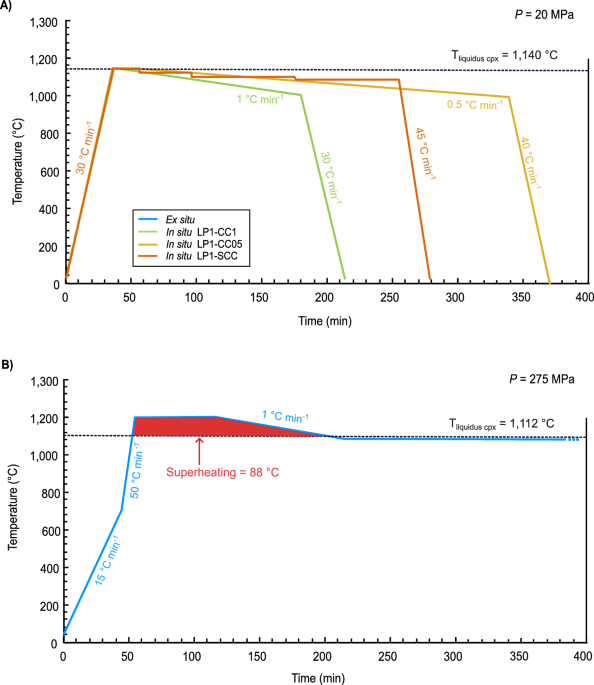
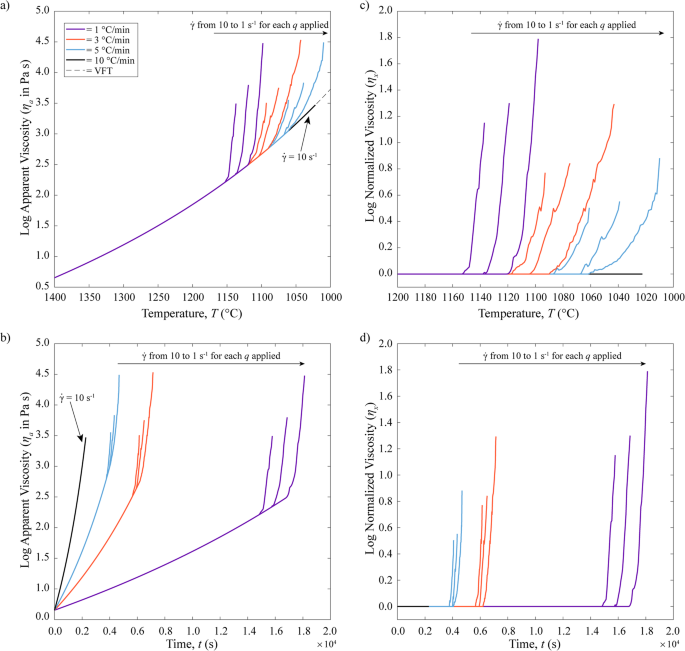
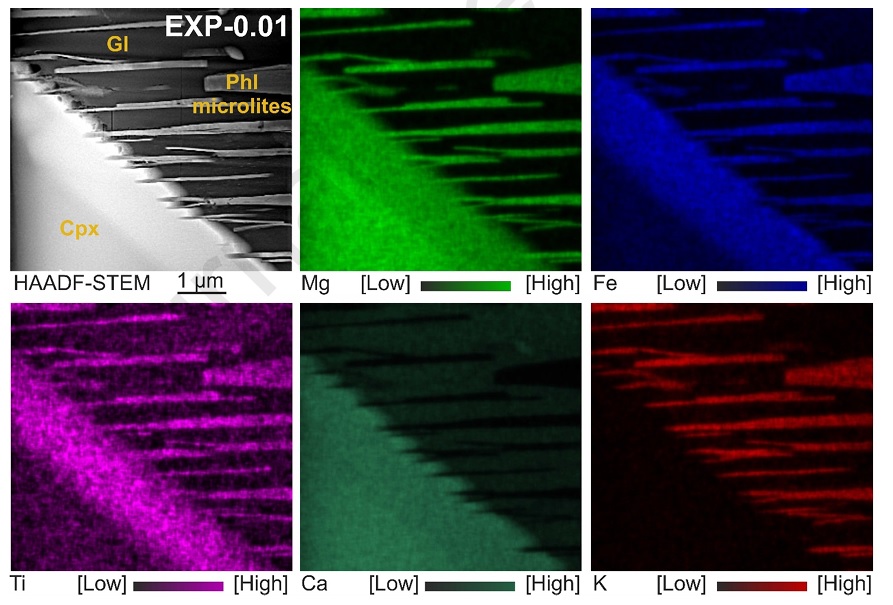
Our new study, Bonechi et al. (Nat. Comm.), investigates how superheating affects crystallisation kinetics in mafic magmas and the implications for magma ascent and eruptive behaviour. Combining synchrotron-based in situ experiments, high-pressure laboratory experiments, Raman spectroscopy, calorimetry and numerical modelling, we examine the nucleation of clinopyroxene in tephritic magmas from the 2021 Tajogaite eruption (La Palma, Canary Islands). The results show that superheating can substantially delay crystal nucleation by dissolving pre-existing nuclei and promoting structural homogenisation of the melt. As a consequence, magmas experiencing higher degrees of superheating remain less crystalline during ascent, maintaining lower viscosities and different ascent dynamics compared with magmas that have resided under near-liquidus conditions. Numerical simulations indicate that variations in nucleation delay can lead to significant differences in crystal content, magma rheology and mass eruption rates. These findings highlight the importance of pre-eruptive thermal histories in controlling crystallisation processes and provide new constraints for modelling magma transport and forecasting volcanic behaviour.
Superheating in mafic magmas controls clinopyroxene nucleation delay and magma ascent dynamics - Nature Communications
This study shows that heating magma above its crystallisation temperature delays crystal formation, reducing crystal content during ascent and controlling volcanic eruption style and intensity.
May 2026. New free, open access tool: calculate volcanic melt viscosity from composition (MELVIS)
We introduce MELVIS (MELt VIScosity), a new open-access web application developed at the GLASS laboratory (CNR-ISSMC, Rome) for modelling the viscosity of volcanic melts directly from major-element compositions. The platform combines ANN-based MYEGA viscosity calculations, volatile-dependent rheological modelling, and composition-specific calibrations derived from experimental datasets in recent literature. MELVIS runs entirely in the browser, requires no installation, and generates publication-ready figures and formatted Excel outputs from simple CSV inputs. The application is currently under active development, with additional melt properties and extended volatile modelling planned for future releases.
A graphical abstract is available.
MELVIS — MELt VIScosity
New free, open access tool: calculate volcanic melt viscosity from composition (MELVIS).
May 2026. Campi Flegrei study
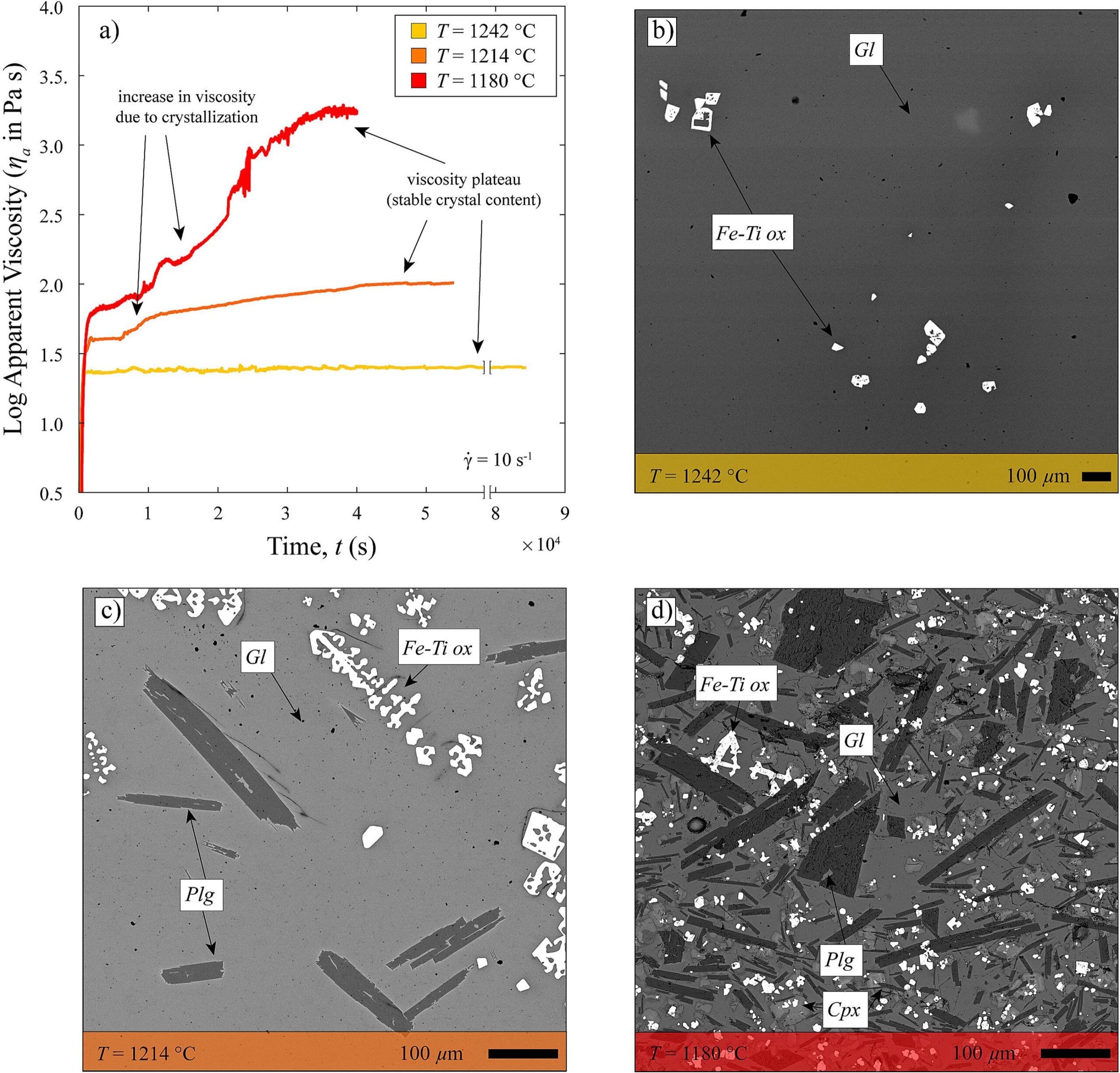
Our new study develops a composition-specific viscosity model for the Agnano–Monte Spina trachytic melt by integrating high-temperature rheometry, falling-sphere experiments, and molecular dynamics simulations. This integrated approach allows us to robustly capture how water content, temperature, and shear rate control melt viscosity over a wide range of pre- and syn-eruptive conditions. The resulting parameterization significantly improves predictions of ascent dynamics, degassing efficiency, and fragmentation thresholds for hydrous trachytic magmas. More broadly, our framework offers a template for building similarly tailored viscosity models for other evolved volcanic systems, enhancing the realism of numerical and experimental eruption models.
Viscosity of Trachytic Melt Constrained by Integrated Rheological and In Situ Spectroscopic Analyses: Insights From the Agnano-Monte Spina Eruption (Campi Flegrei, Italy)
Quantifying the viscosity of hydrous volcanic melts is essential for understanding ascent dynamics, degassing efficiency, and fragmentation, yet laboratory measurements may be compromised by syn-analytical evolution in melt structure at the nanoscale, thus yielding viscosity values not representative of a homogeneous melt phase. This issue remains poorly explored in highly polymerized trachytic magmas, for which robust viscosity constraints are scarce despite their relevance to explosive volcanism. We develop a composition-specific viscosity model for the Agnano-Monte Spina (AMS) trachyte using an integrated approach, combining differential scanning calorimetry (DSC), micropenetration viscometry (MP), Brillouin light scattering, and in situ high-temperature Raman spectroscopy.
April 2026. A gas-slug model for basaltic Vulcanian eruptions at Stromboli volcano
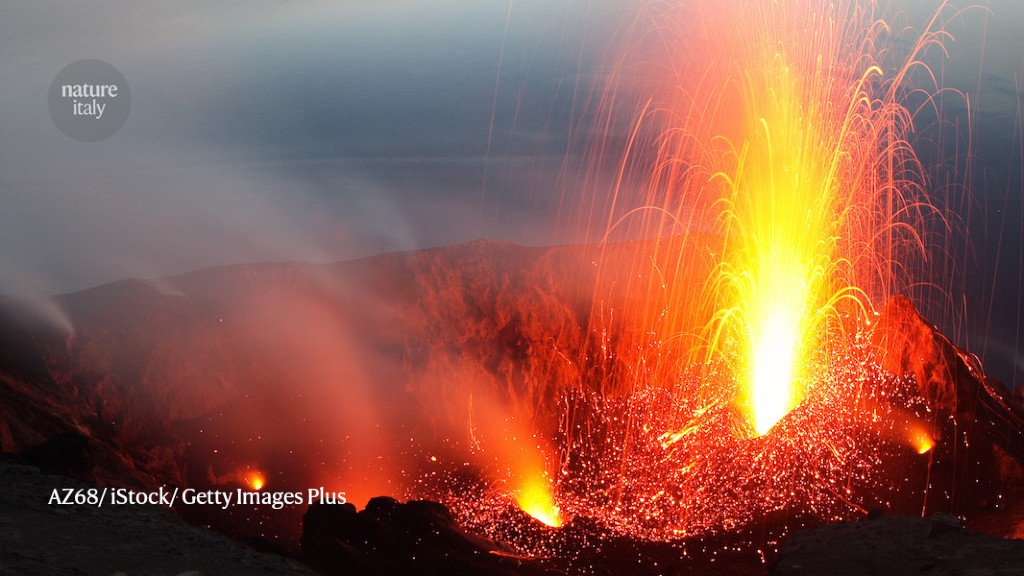
In Giordano et al. (2026) we examined the July 3, 2019, paroxysm at Stromboli and argue that this eruption is better explained as a basaltic Vulcanian event rather than by the usual model of deep, volatile-rich magma simply rising to the surface. Textural evidence from the erupted materials shows that the low-porphyritic pumice formed through very rapid decompression, fragmentation, and quenching during the explosion. We propose that a large rising gas slug pressurized and broke through a shallow conduit already filled with highly porphyritic magma, triggering top-down decompression and evacuation of both shallow and deeper magma. This study therefore offers a new model for how explosions can occur even at open-conduit basaltic volcanoes like Stromboli, and we argue that this model fits the observed eruption dynamics and geophysical data better than previous explanations.
A gas-slug model for basaltic Vulcanian eruptions at open-conduit volcanoes, constrained by textural characteristics and dynamics of the July 3rd, 2019, Stromboli eruption (Italy)
Stromboli is a unique open-conduit mafic volcano known for persistent Strombolian eruptions of highly porphyritic (HP) basaltic-shoshonite scoria. Stronger paroxysmal explosions occur once or twice per decade, ejecting low porphyritic (LP) golden pumicefrom deeper volatile-rich magma. The July 3rd, 2019, paroxysm showed features of a Vulcanian eruption—supersonic blast,ballistic ejection, and pyroclastic flows—despite Stromboli’s open-conduit basaltic nature. Textural analysis suggests that LPpyroclasts formed via rapid decompression, fragmentation, and quenching. This event likely resulted from shallow HP-filledconduit pressurization and failure triggered by a rising large gas slug. This caused top-down decompression, evacuating bothHP and deeper LP magma. The proposed “basaltic Vulcanian” model better fits geophysical data than the traditional deep LPmagma ascent model.
April 2026. Constraints on the magmatic variables governing pre-eruptive conditions at Hunga volcano
In Calfiano et al. (2026) we present experimental and thermodynamic constraints on the magmatic conditions preceding eruptions at Hunga volcano and develops a new equilibrium thermometer based on orthopyroxene–clinopyroxene compositions. High-pressure crystallization experiments on basaltic andesite show that temperature and melt-water content strongly control mineral assemblages and differentiation paths, indicating pre-eruptive conditions of about 1050–1130 °C and up to ~3 wt.% H₂O in the magma. The results support a polybaric and polythermal plumbing system beneath Hunga volcano and provide improved tools for reconstructing magmatic storage conditions in arc volcanoes.
Experimental and thermodynamic constraints on the magmatic variables governing pre-eruptive conditions at Hunga volcano: Development of a new equilibrium orthopyroxene-clinopyroxene thermometer
The cataclysmic eruption of Hunga volcano (Tonga-Kermadec arc system) on 15 January 2022, the most powerful explosive volcanic event of the 21st century, underscores the critical need to constrain the pre-eruptive magmatic conditions governing arc volcanoes with shallow marine calderas. In this study, we present results from isobaric-isothermal crystallization experiments conducted on a basaltic andesite representative of primitive magmas at Hunga volcano.
March 2026. High mechanical resistance – porous ceramics by cold sintering of volcanic ash from Mount Etna
In Biesuz et al. (2026) we demonstrated that volcanic ash from Mount Etna can be consolidated into porous ceramics via the cold sintering process at temperatures below 200 °C, using either water or a KOH solution as a transient liquid phase and applying pressures of 100–500 MPa.
The resulting materials exhibit 22–39 % porosity, thermal conductivity comparable to conventional fired bricks, and markedly superior mechanical strength. This low-energy, waste-valorizing route offers a sustainable alternative for recycling large volumes of volcanic ash into high-performance building materials.
High mechanical resistance - porous ceramics by cold sintering of volcanic ash from Mount Etna
The disposal of the volcanic ashes from explosive eruptions, like those of Mount Etna (Sicily, Italy), poses significant health, environmental, and economic concerns. Herein, we show that the volcanic ashes can be transformed into porous ceramics by the cold sintering process (CSP) at temperatures lower than 200°C. The consolidation is aided by a liquid medium that can be either water or a caustic KOH solution and by the application of a few hundred megapascals.
February 2026. Modeling magma viscosity and ascent dynamics of the 472 CE sub-Plinian eruption of Somma-Vesuvius (Italy)
In Dominijanni et al. (2026) we examined how the physical and chemical properties of phonotephritic magma influenced the dynamics of the historic 472 CE eruption by integrating new experimental data into a temperature- and water-dependent viscosity model. We showed that melt fragility increases with water content, leading to dramatic increases in viscosity during dehydration that exceed predictions from empirical models. When incorporated into a conduit flow model, this improved rheological framework provides refined insights into magma ascent and fragmentation processes for this key volcanic event, with implications for understanding explosive eruption dynamics.
Modeling magma viscosity and ascent dynamics of the 472 CE sub-Plinian eruption of Somma-Vesuvius (Italy)
The 472 CE sub-Plinian eruption of Somma-Vesuvius represents a critical reference scenario for volcanic hazard assessment, yet the physico-chemical melt controls on magma dynamics remain poorly constrained. We present an experimental and numerical investigation of magma ascent, incorporating a newly developed temperature- and water-dependent viscosity model for the phonotephritic melt involved in the climactic phase of the eruption.
January 2026. Chemically driven nano-elastic heterogeneities control fragility in volcanic melts
In Cassetta et al. (2026) we explored how nanoscale structural variations within silicate melts influence their mechanical behavior, especially the transition between ductile flow and brittle failure relevant to volcanic processes. We quantified key parameters like structural correlation length and microscopic free volume across a compositional series from basaltic to rhyolitic melts, and showed that increases in these nanoscale heterogeneities correlate with changes in melt fragility and elastic properties. We provide a quantitative framework connecting melt composition and medium-range structural features to rheological responses, offering new insights into how volcanic melts deform and break under different conditions.
Chemically Driven Nano-Elastic Heterogeneities Control Fragility in Volcanic Melt
Here, the nanoscale structural drivers of the mechanical behavior of volcanic glasses are explored. The study spans a compositional series ranging from basalt to rhyolite, encompassing also technical glass-forming melts. Using a granular-medium framework, the vibrational and physical properties of synthetic silicate glass-forming melts are characterized.
December 2025. Precipitation kinetics of nucleating agents in LAS glass-ceramics
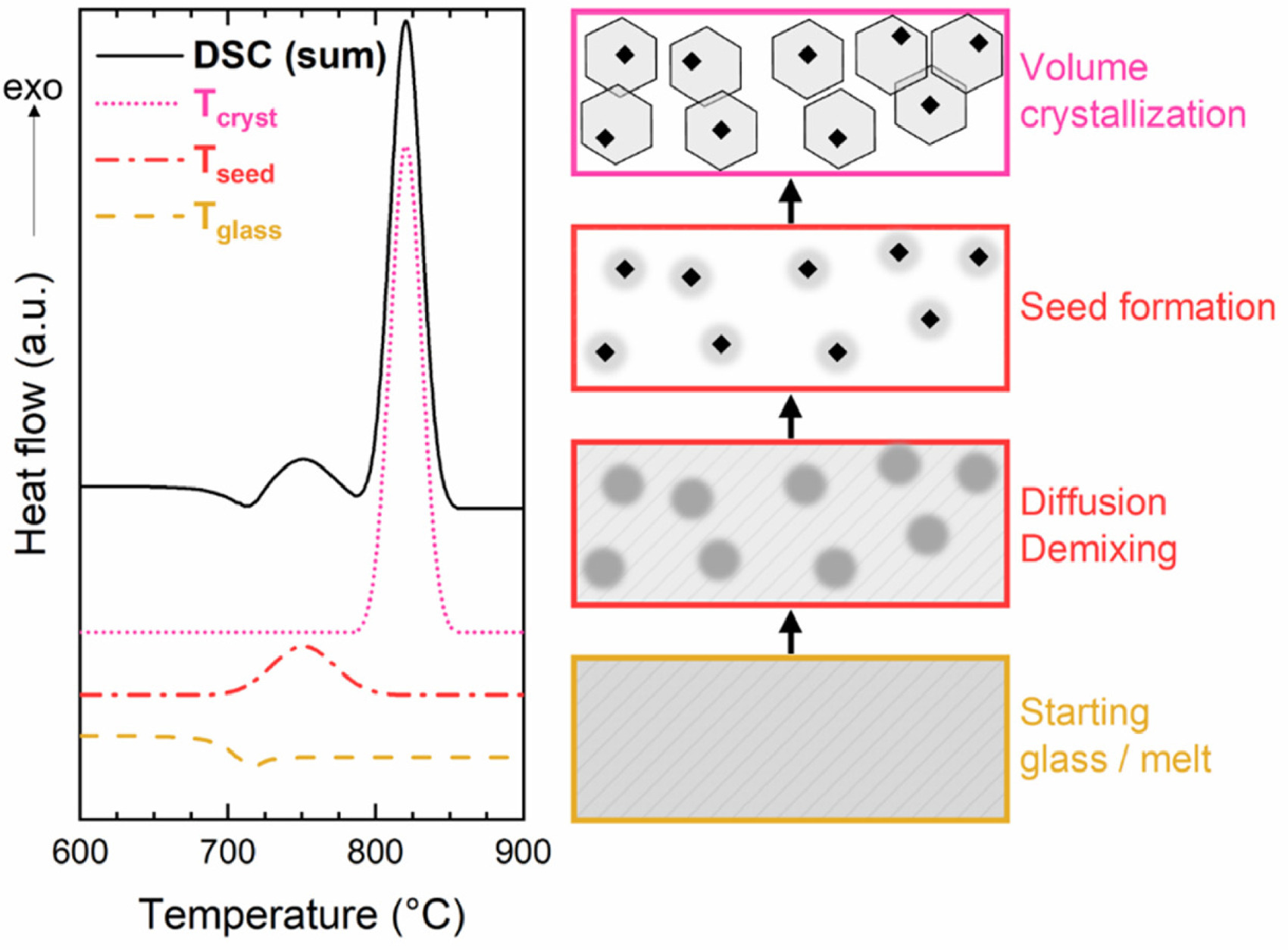
In Streichert et al. (2025) we investigated how small amounts of nucleating agents in lithium aluminosilicate (LAS) glass-ceramics begin to form crystals during heat treatment, a process that is hard to measure due to their low concentration. We used in-situ high-temperature Raman spectroscopy during isothermal holds to reveal a two-stage transformation: an initial liquid-liquid phase separation linked to changes in Ti⁴⁺ coordination, followed by the formation of TiO₂(B) and anatase phases in demixed regions. By applying a sectional Johnson–Mehl–Avrami-Kolmogorov analysis, we identified a stationary nucleation mechanism in the first stage and minimal volume change in the second, advancing kinetic understanding of crystallization in technical LAS glass-ceramics.
Precipitation Kinetics of Nucleating Agents in LAS Glass-Ceramics by High Temperature Raman Spectroscopy
The precipitation kinetics of nucleating agents in technical lithium aluminosilicate (LAS) glass-ceramics is challenging to determine in laboratory practice due to the low content of about 3 wt%. Therefore, isothermal heat treatment series in the temperature range 750–820 °C with simultaneous recording of Raman spectra were carried out, which revealed a two-fold crystallisation process. In the first stage, an increase in oxygen coordination of Ti4+ from 4 and 5 to 6 is indicated, which was assigned to a liquid-liquid phase separation, while in the second stage ordering of the short range led to crystallisation of TiO2(B) and anatase in the demixed domains. Using a sectional JMAK analysis of the temporally decoupled process, a stationary nucleation mechanism with no detectable growth is proposed for the first stage, while the second stage led to almost no change in volume fraction over time.
November 2025. Viscosity and structure relationships in Na2O-enriched haplogranitic melts
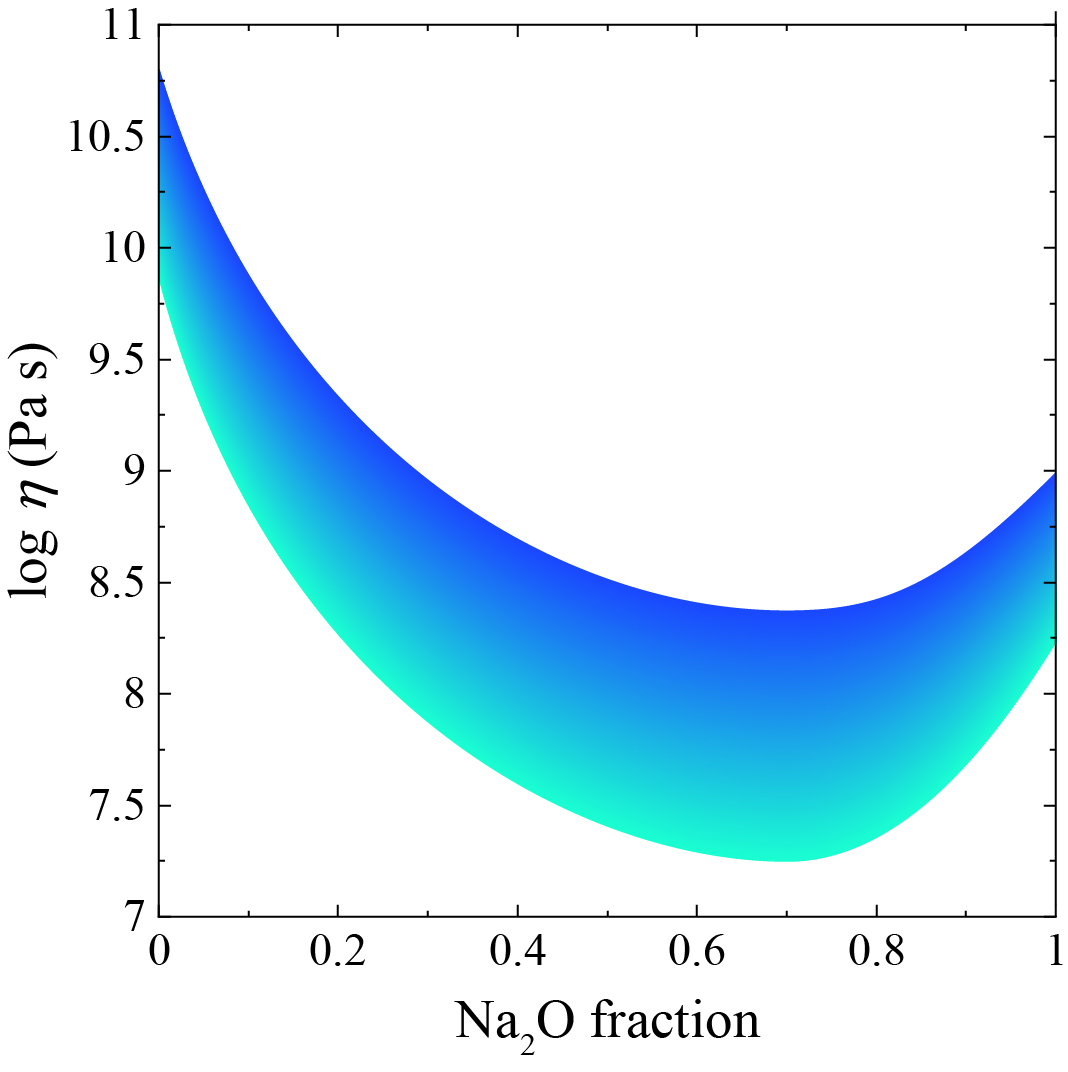
In Stopponi et al. (2025) we show how increasing amounts of sodium oxide affect the structure, thermal behavior, and viscosity of haplogranitic silicate melts using micropenetration viscometry, Raman spectroscopy, and differential scanning calorimetry (DSC). Results show that adding Na₂O depolymerizes the melt structure, leading to a pronounced decrease in viscosity and a consistent increase in melt fragility, with clear links between nanoscale vibrational dynamics and macroscopic flow behavior. We also refine DSC-based shift-factor approach to improve accuracy in characterizing viscosity-temperature relationships, offering a predictive tool for understanding the rheology of Na₂O-rich peralkaline rhyolites relevant to evolved magmatic systems.
Viscosity and structure of Na2O-enriched haplogranitic melts: a DSC shift-factor calibration for peralkaline rhyolites
The influence of excess Na2O on the structure, thermal properties and viscosity of haplogranitic melts was systematically investigated by integrating micropenetration viscometry, Raman spectroscopy (including Boson peak analysis) and differential scanning calorimetry (DSC).
This approach reveals fundamental structure-property relationships in these felsic melt analogs. We demonstrate that Na2O-induced network depolymerization, clearly evidenced by Raman spectroscopy, provides a direct rationale for the observed dramatic, non-linear decrease in melt viscosity and a concurrent systematic increase in melt fragility.
October 2025. Aluminum control on viscosity and structure of haplogranitic melts: Implications for rhyolitic melt viscosity determination.
In Giuliani et al. (2025) we examined how aluminum controls the viscosity and structural polymerization of haplogranitic (rhyolitic) melts by combining micropenetration viscometry, differential scanning calorimetry (DSC), and Raman spectroscopy. Results show that changes in Al content produce measurable shifts in melt structure and viscosity, indicating that Al-driven polymerization must be accounted for when determining rhyolitic melt viscosities. We calibrate the DSC shift-factor approach for rhyolitic melts. This work refines viscosity determinations for felsic magmas and thereby improves models of magma transport and eruptive behaviour.
Aluminum control on viscosity and structure of haplogranitic melts: Implications for rhyolitic melt viscosity determination
Accurate determination of melt viscosity near the glass transition temperature (Tg) is critical for modeling volcanic processes, but direct measurements are often compromised by nanostructuration in natural Fe–Ti-bearing systems, especially during experimental manipulation. Differential scanning calorimetry (DSC) offers an alternative method for estimating viscosity via so-called “shift factors” (K), which link enthalpy to shear relaxation (and thus shear viscosity).
September 2025. Characterization of mixed-waste glasses in the CAS system: insights from differential scanning calorimetry and Raman spectroscopy.
In Stabile et al. (2025) we evaluated vitrifying construction and ceramic wastes in the CaO–Al₂O₃–SiO₂ (CAS) system by melting blended samples at 1200 °C and characterizing the products with Raman spectroscopy and differential scanning calorimetry. Weshow that compositions containing ~70 wt% ceramic powder yield fully amorphous, silica-rich glasses with increased network polymerizationand higher viscosities near the glass transition. These findings indicate that carefully formulated CDW–ceramic blends can be thermally processed into industrially useful glasses, supporting practical upcycling routes for construction waste.
Characterization of mixed-waste glasses in the CAS system: insights from differential scanning calorimetry and Raman spectroscopy
Construction and Demolition Waste (CDW) was blended with various ceramic residues (bricks, roof tiles, and ceramic powder) and melted at 1200 °C for 8 h to evaluate their potential for producing industrially viable glasses within the CaO-Al2O3-SiO2 (CAS) system.
August 2025. Intralaboratory calibration of the DSC shift-factor approach for melt viscosity determination.
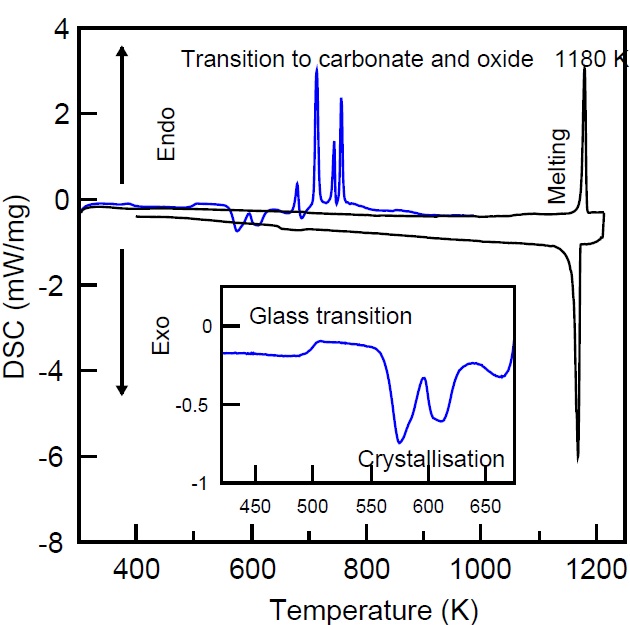
Our new study in the Journal of Non-Crystalline Solids presents an intralaboratory calibration of the DSC shift-factor approach for lead metasilicate glass using combined ball penetration viscometry, conventional DSC, and flash DSC on identical samples. We determined DSC shift factors, enabling viscosity determination across eight orders of magnitude with precision comparable to direct measurements. This refined calibration demonstrates the critical importance of using identical sample batches and highlights potential chemical dependence of shift factors in highly fragile glass-forming systems.
Intralaboratory calibration of the DSC shift-factor approach for melt viscosity determination: A case study on lead metasilicate glass
In this study, we determine K for lead metasilicate (PbSiO3) glass by integrating conventional DSC, flash DSC, and ball penetration viscometry measurements on samples obtained from the same batch. Raman spectroscopy was employed to verify sample integrity before and after measurements.
August 2025. First 3D visualization of nanolite aggregation in volcanic glass using X-ray ptychography.
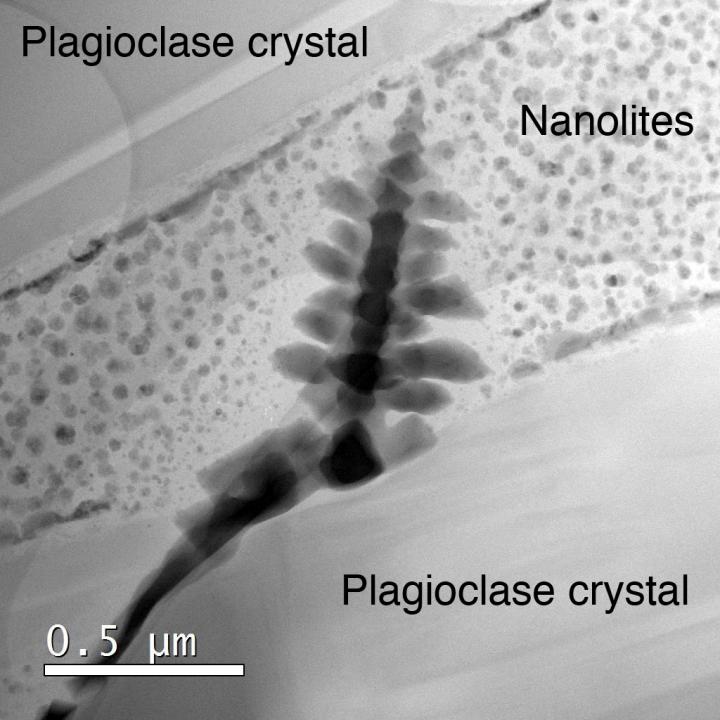
Our new study (Bamber et al. 2025) in Nature Communications presents the first 3D nanometer-scale visualization of nanolites in basaltic volcanic glass using X-ray ptychography at Diamond Light Source. We found that Ti-magnetite nanolites aggregate into complex 3D structures, creating differentiated boundary layers that increase magma viscosity by 2-3 orders of magnitude. This syn-eruptive nanocrystallization helps explain how basaltic magmas can produce highly explosive Plinian eruptions.
3D quantification of nanolites using X-ray ptychography reveals syn-eruptive nanocrystallisation impacts magma rheology
3D visualisation of nano-scale crystals using X-ray ptychography shows that the aggregation of nanolites can increase magma viscosity, increasing the potential of magma fragmentation and a highly explosive volcanic eruption
July 2025. New study on lava flow rheology of the January 2024 Sundhnúksgígar eruption (Iceland).
Our new research (Di Fiore et al. 2025) on the January 2024 Sundhnúksgígar eruption in Iceland reveals key insights into basaltic lava behavior. We studied how cooling rates affect lava’s viscosity and flow, finding that the Sundhnúksgígar basalt has a uniquely low rate of viscosity increase during crystallization. This basalt’s ability to crystallize even at high cooling rates suggests it can form a rigid outer crust quickly. This rapid crust formation insulates the lava’s interior, allowing it to maintain lower viscosity and flow efficiently over longer distances.
Impact of cooling rate on rheology and emplacement dynamics of basaltic lavas: Insights from the January 2024 Sundhnúksgígar eruption (Iceland)
The 2023–2024 eruptions at Sundhnúksgígar in Iceland produced tholeiitic basaltic lavas that traveled at high velocities, affecting vast areas. Under such conditions, disequilibrium crystallization can play a fundamental role in modulating the lava flow dynamics and inundation capacity.
June 2025. New study on andesite magma and nanoscale chemical heterogeneities showing the first in-situ observation of nanolite formation in magmas.
In our new study (Valdivia et al. 2025), published in Communications Earth & Environment, we set out to explore how these tiny crystals (nanolites), so small they can only be seen with powerful electron microscopes, influence the viscosity of andesitic magma. This question is especially important at arc volcanoes like Sakurajima, where andesitic magmas dominate and eruptions can rapidly shift between effusive and explosive behavior. Our research shows that even a small amount of nanolites can increase magma viscosity by up to thirty times. This is a dramatic change, enough to significantly alter how magma behaves.
Nanoscale chemical heterogeneities control the viscosity of andesitic magmas
Nanosized chemical heterogeneities modulate andesitic magma viscosity at early stages of nano-crystallization, according to viscosity models that account for variations in transition metal content
April 2025. Ercolano, il cervello diventa vetro: il CNR-ISSMC ricostruisce la dinamica termica di un evento unico al mondo
Condividiamo l’intervista andata in onda su Futuro24, la rubrica di RaiNews24 dedicata a scienza e tecnologia, curata da Andrea Bettini e Marco Dedola. Durante la puntata, abbiamo discusso del nostro recente studio sulla vetrificazione del cervello umano ritrovato a Ercolano, un caso unico al mondo.
Link al servizio
Ringraziamo la redazione di Futuro24 per l’opportunità di approfondire questo affascinante argomento e di condividerlo con un pubblico più ampio.
March 2025. Vesuvius volcano turned this brain to glass (video from Nature)
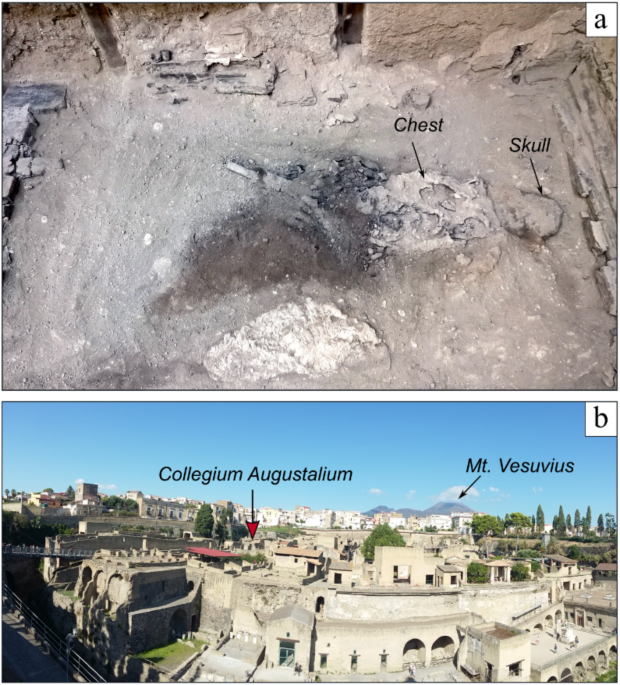
Our new Scientific Reports study uncovers a unique and rare phenomenon: the transformation of a human brain into glass during the eruption of Vesuvius in 79 CE. Normally, organic tissues do not vitrify at high temperatures, but we found that extreme heat—above 510°C—followed by rapid cooling caused this rare preservation. This discovery, the only known case on Earth, provides new insights into the extreme conditions of pyroclastic flows and how they impact human remains. Our findings shed light on the violent nature of the eruption and open new avenues for studying ancient biological materials.
Unique formation of organic glass from a human brain in the Vesuvius eruption of 79 CE
Here we demonstrate that material with glassy appearance found within the skull of a seemingly male human body entombed within the hot pyroclastic flow deposits of the 79 CE Vesuvius eruption formed by a unique process of vitrification of his brain at very high temperature, and is the only such occurrence on Earth.
February 2025. New study on Colli Albani melt viscosity and implications for mafic Plinian eruptions
Our new study (Fanesi et al. 2025) looks at magma from Italy’s Colli Albani volcano and reveals that under high-temperature, water-rich conditions, the magma is much less viscous than expected, enablig fast transfer at depth. However, as it loses water, crystals form rapidly, making the magma up to 4300 times more viscous. These findings improve our understanding of how magma is stored and moves beneath the surface, shedding light on the processes behind explosive eruptions.
A review of the differential scanning calorimetry shift–factor approach: Application to Colli Albani melt viscosity and implications for mafic Plinian eruptions
The differential scanning calorimetry (DSC) shift factor has recently been applied to model the viscosity of volcanic melts, revealing that such melts are often less viscous and more prone to nanoscale phase separation and crystallization of nanolites (i.e., nanostructuration) than previously thought.
January 2025. New study on nanolite Crystallization, high-temperature Raman spectroscopy and low-temperature rock-magnetic analysis
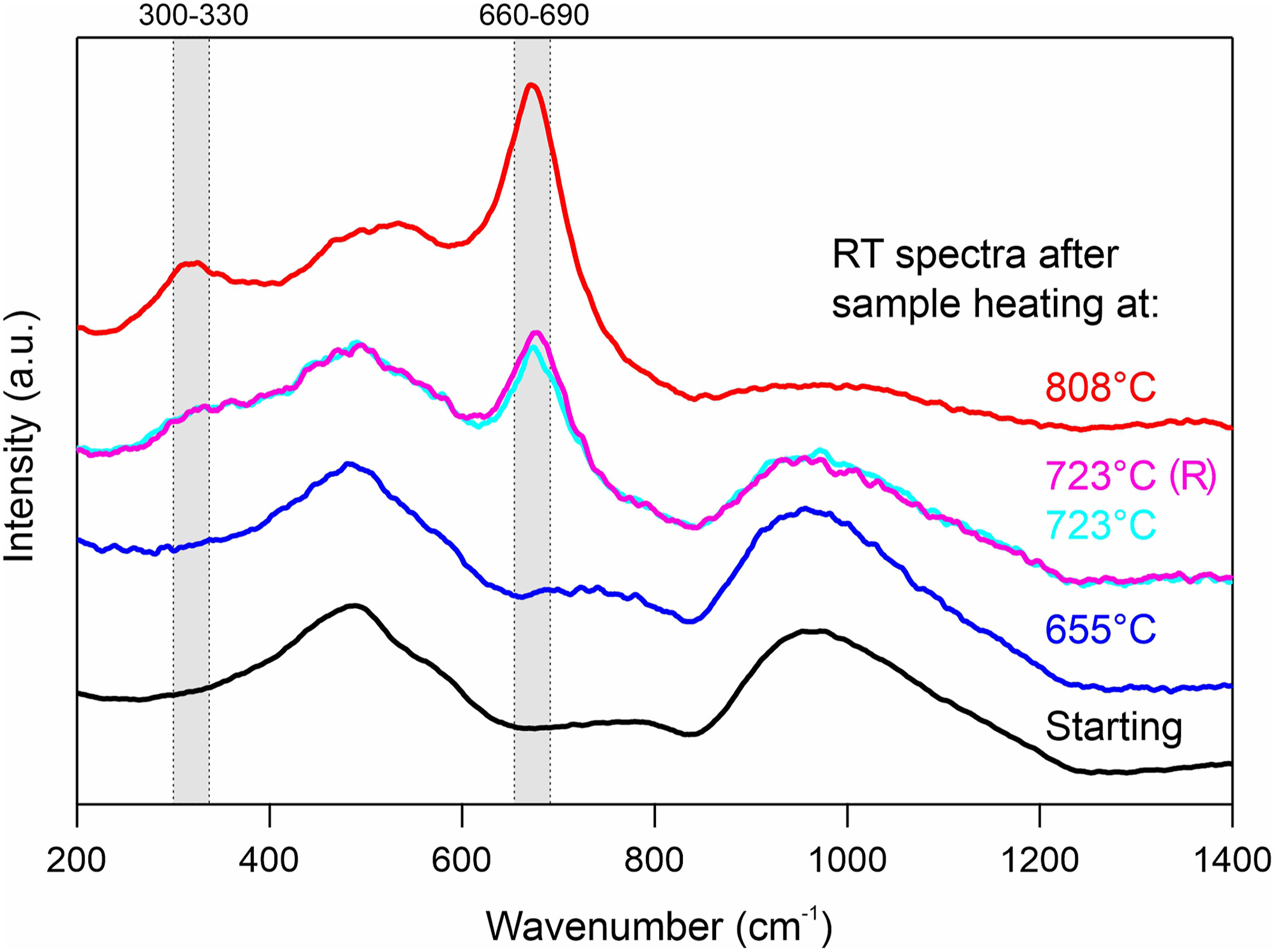
Our latest study, published in Geochemistry, Geophysics, Geosystems, introduces a cost-effective way to study nanolites at high temperatures. Traditionally, such research required expensive tools, but we demonstrate that Raman spectroscopy—a more accessible technique—can effectively analyze nanolites in volcanic andesite. By heating samples above 655°C, we observed nanolite formation as temperatures increased and over time. This breakthrough offers a simpler method to investigate volcanic processes, advancing our ability to understand volcanic eruptions.
Nanolite Crystallization in Volcanic Glasses: Insights From High‐Temperature Raman Spectroscopy and Low‐Temperature Rock‐Magnetic Analysis
Nanocrystallization in Fe-bearing volcanic melts has been observed for the first time using in situ Raman spectroscopy at high temperatures Fe-Ti-oxide nanolites form and progressively grow with…
October 2024. First video documenting nanocrystal formation in a magma
We are thrilled to share that, for the first time, we have successfully filmed the formation of nanocrystals in magma at temperatures relevant to volcanic eruptions. This groundbreaking achievement was made possible through a collaborative effort between the GLASS laboratory at the Institute of Science and Technology for Ceramics (CNR-ISSMC) in Rome and the Institute of Extreme Conditions and Materials: High Temperature and Irradiation (CEMHTI-CNRS) in Orléans.
This video represents a significant milestone, not only for volcanology but also for the glass-ceramics community. It offers new insights into nanocrystal formation processes under extreme conditions, contributing to a deeper understanding of magma behavior and its potential impact on volcanic activity. The project results from intensive and dedicated collaboration among colleagues in Italy, France, and Germany.
Our findings have been published in a preprint at this link. We look forward to continuing this research and expanding our understanding of these fascinating processes.
October 2024. Differential Scanning Calorimeter
We are proud to introduce the DSC 5+ from Mettler Toledo, a high-precision Differential Scanning Calorimeter designed to measure the heat flow associated with material transitions. This instrument offers a wide temperature range from up to 700°C, allowing us to study thermal properties across a diverse array of materials, including volcanic melts, glasses, ceramics, and polymers. The DSC 5+ provides unparalleled sensitivity and accuracy, making it ideal for investigating phase transitions, melting behavior, glass transition temperatures, and crystallization processes. Its high resolution allows for precise thermal profiling, which is critical for both basic research into volcanic processes and the development of high-performance materials for industrial applications. The DSC 5+ also supports controlled cooling and heating rates, ensuring that even the most subtle thermal events are captured, which is essential for understanding the physicochemical changes in materials under varying environmental conditions. This tool plays a key role in our research into thermal stability, decomposition, and the calorimetric characterization of new materials.
DSC5+ GLASS laboratory CNR ISSMC Rome
September 2024. 13th International Symposium on Crystallization in Glasses and Liquids, Orléans (France).
I have been invited to speak at the 13th International Symposium on Crystallization in Glasses and Liquids, held in Orléans. This prestigious event continues the tradition of high-quality conferences organized by the International Commission on Glass (ICG), providing an essential platform to discuss the latest advancements in glass technology.
My presentation, titled “Crystallization in natural melts: nanoscale approach to volcanic eruptions and unconventional ways to derive melt viscosity”, will explore an analytical and experimental approach to understanding magma fragmentation and its implications for explosive volcanic behavior. By employing advanced techniques, I will discuss how nanocrystal formation can influence magma viscosity and improve the numerical modelling of eruptions.
I am excited to learn from colleagues and industrial partners about the latest discoveries and updates in the glass-ceramics world. I look forward to establishing new collaborations and exchanging insights with fellow experts in the field. A special thanks to the conveners, the organizers, and all the speakers for their contributions in making this event an excellent opportunity for scientific exchange and growth.
13th International Symposium Crystallization
13th International Symposium on Crystallization in Glasses and Liquids
Continuing the tradition, the 13th edition will be held in Orléans and will provide an international forum for the most recent developments of crystallization in glasses and liquids.
The conference will maintain the quality of the previous congresses while featuring new topics to learn about the latest developments in glass technology.
September 2024. Alfred Rittmann 2024 Conference, Catania (Italy).
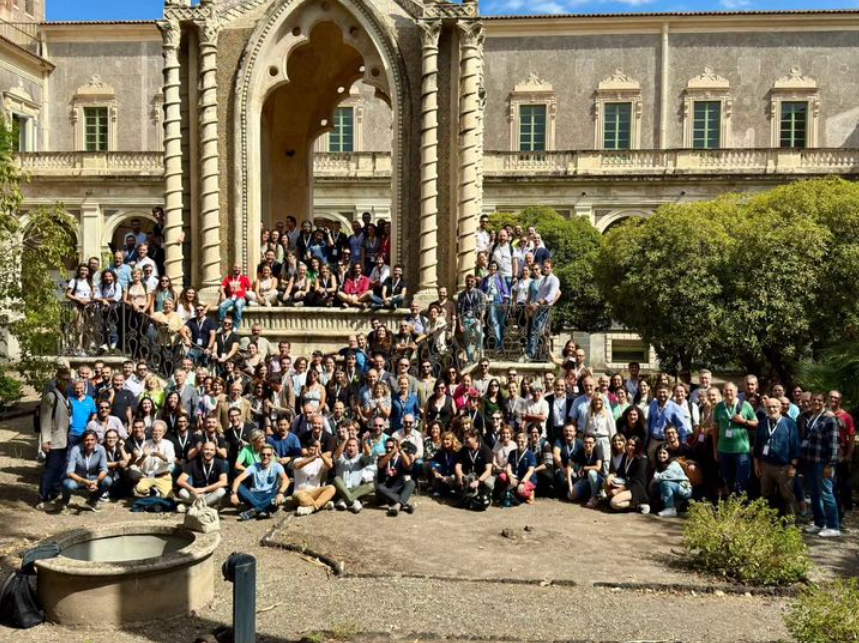
The Alfred Rittmann 2024 Conference, held in Catania at the Benedictine Monastery from 18 to 20 September, was attended by over 300 researchers from universities and research institutes. The Alfred Rittmann Conference is promoted by the Italian Association of Volcanology (AIV).
Our team and collaborators participated with contributions on new models for magma viscosity, high-temperature in-situ observations of nanolite formation, eruptive dynamics of silicic peralkaline magmas from Pantelleria island, crystallization timescales and rheological behaviour in basaltic volcanic systems, dissolution kinetics of crystals in hydrous magmas through 4D in situ experiments.
Rittmann conference 2024
L’Associazione Italiana di Vulcanologia, l’Istituto Nazionale di Geofisica e Vulcanologia, l’Università degli Studi di Catania e l'International Association of Volcanology and Chemistry of the Earth's Interior organizzano la 6a Conferenza Alfred Rittmann, che si terrà dal 18 al 20 Settembre 2024 a Catania presso il Monastero dei Benedettini di San Nicolò l’Arena.
September 2024. New study on the viscosity of phonotephritic melt from Vesuvius.
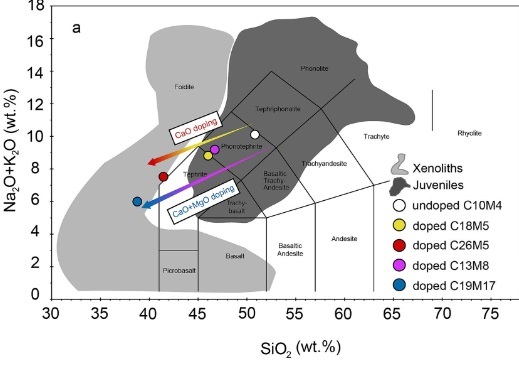
Our study examines how magma interacts with carbonate rocks and how this affects its flow. Using volcanic melt from the 472 CE Pollena eruption at Vesuvius, we added CaO and a mix of calcium and magnesium oxides to mimic natural interactions with carbonates. We found that CaO reduces the magma’s viscosity significantly at high temperatures, while both CaO and MgO affect flow at lower temperatures. These changes impact how magma flows and mixes, helping improve predictions of volcanic behavior.
The effect of carbonate assimilation and nanoheterogeneities on the viscosity of phonotephritic melt from Vesuvius
Interaction between magma and carbonate plays a pivotal role in volcanic systems, yet its impact on magma transport properties remains inadequately explored. This study presents novel viscosity data on a leucite-bearing phonotephritic melt from the 472 CE Pollena eruption (Vesuvius, Italy), doped with varying amounts of CaO and CaO + MgO. The compositions match the chemistry of melt inclusions and interstitial glasses from skarns at Vesuvius.
July 2024. Our team at the European Synchrotron Radiation Facility (ESRF), France.
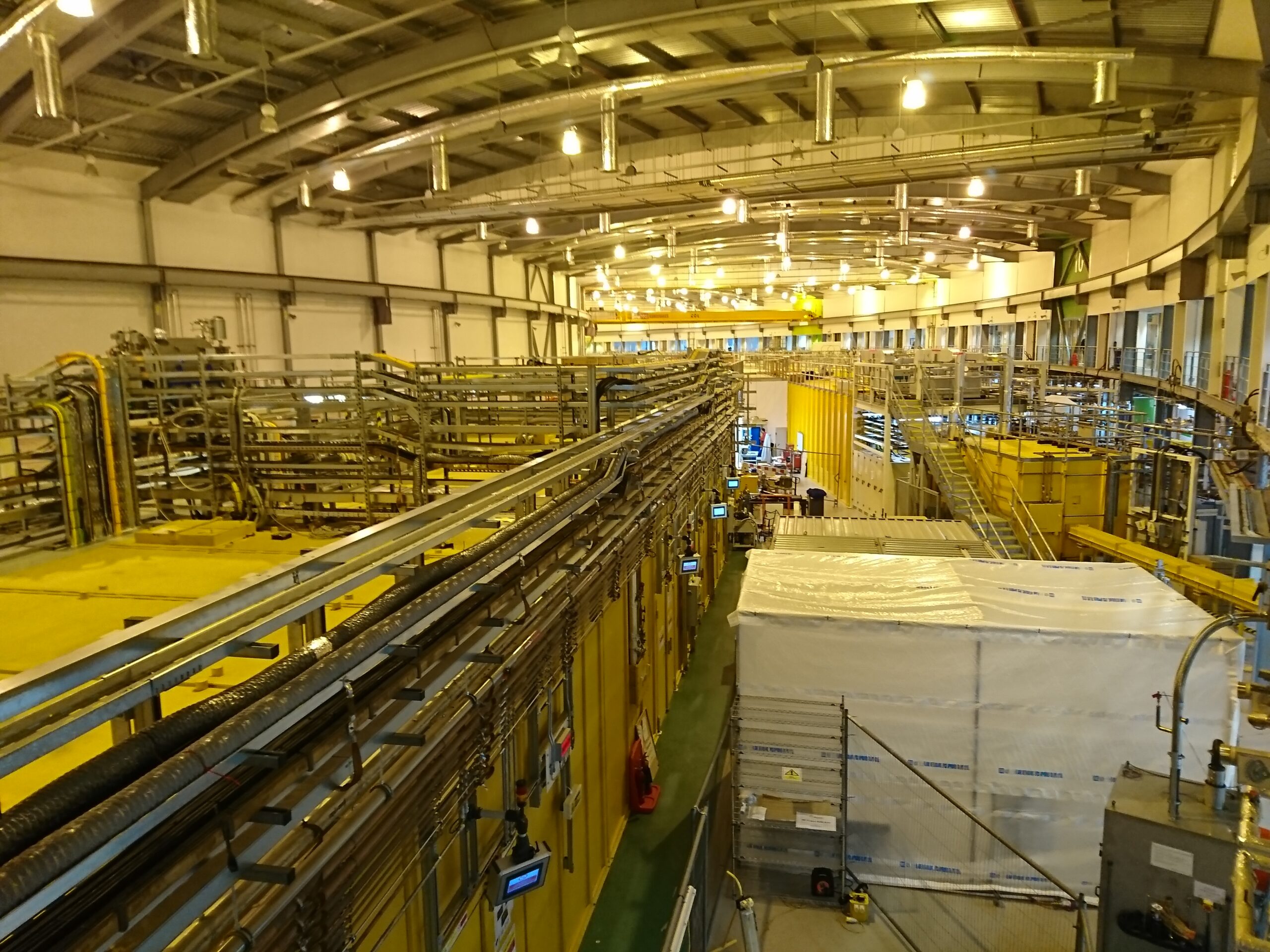
The ID02 beamline at ESRF is a combined ultra small-angle and wide-angle scattering instrument. The microstructure and non-equilibrium dynamics of systems can be probed from sub-nanometer to micron scale, and down to sub-millisecond time range. We have performed experiments on magmas to study their nanoscale dynamics, which will be crucial for our future research on volcanic eruptions. Link to ID02.
June 2024. Influence of cooling and shear rates on volcanic dynamics: insights from Stromboli and Etna
Magma ascending through Earth’s crust undergoes complex chemical and physical changes that can lead to crystallization, contributing to a thermodynamic equilibrium state. This process significantly impacts volcanic system dynamics and eruptive styles. Our new study on Stromboli (Italy) magma revealed that cooling rates strongly influence basalt solidification. In contrast, shear rates have a lesser effect, with differences noted compared to Etna basalts due to varying chemical compositions.
Vulcani: piccole differenze, grandi effetti. La chimica e la reologia dietro le eruzioni di Etna e Stromboli.
I vulcani Stromboli ed Etna possono eruttare in modo più esplosivo a causa di minime variazioni nella composizione chimica del loro magma. Lo rivela uno studio pubblicato sulla rivista Nature Communications Earth & Environment, condotto da un team multidisciplinare dell'Istituto Nazionale di Geofisica e Vulcanologia, dell'Università degli Studi Roma Tre e del Consiglio Nazionale delle Ricerche.
May 2024. Magma titanium and iron contents dictate crystallization timescales and rheological behaviour in basaltic volcanic systems
Volcanoes can erupt in a variety of ways, from gentle lava flows to violent explosions. Our study suggests that the composition of the magma plays a key role in determining how explosive an eruption will be. We focused on two types of volcanoes: Stromboli, known for its frequent, but relatively small eruptions, and Mount Etna, with a history of both explosive and effusive eruptions. We found that the difference in how quickly the magma crystallizes is due to the magma’s composition. We concluded that the speed of crystallization in these two basaltic magmas may influence how gas escapes from the magma, which affects how violently the volcano erupts.
Magma titanium and iron contents dictate crystallization timescales
A critical compositional factor influences the rheological evolution and crystallization timescales of basalts under disequilibrium conditions, according to cooling rate deformation experiments carried out on Stromboli melt.
March 2024. Simultaneous thermal analysis (STA, TGA-DSC) coupled with evolved gas analysis by mass spectrometry (EGA-MS)
Introducing our new Mettler Toledo TGA/DSC 3+ apparatus, an advanced system that combines simultaneous thermal analysis (STA) and evolved gas analysis by mass spectrometry (EGA-MS). This equipment integrates Differential Scanning Calorimetry (DSC) and Thermogravimetric Analysis (TGA) with the ThermoStar Pfeiffer Vacuum GSD 320 EGA-MS. Capable of reaching temperatures up to 1500°C, the TGA/DSC 3+ measures heat flow and identifies volatile species released during thermal analysis. The integration of EGA-MS allows for simultaneous monitoring of mass changes and thermal events while analyzing evolved gases. This new addition to our lab enhances our ability to analyze material properties and behaviors under high-temperature conditions, providing detailed insights into thermal decomposition processes, phase transitions, and chemical reactions. The TGA/DSC 3+ EGA-MS is a valuable tool for advancing our research and expanding our understanding of various materials.
TGA-DSC-MS GLASS laboratory CNR ISSMC
October 2023. Kinetic partitioning of trace cations between zoned clinopyroxene and a variably cooled-decompressed alkali basalt
Our new study examines trace cations in crystals from volcanic rocks at Mt. Etna in Italy. The crystals show various zoning patterns due to differences in the melt composition and supersaturation effects. The research focuses on the thermodynamics of cation distribution within these crystals, highlighting how kinetic factors play a significant role, leading to changes in crystal structure and electrostatic forces. This complexity suggests that the traditional notion of constant partition coefficients in equilibrium may not apply to the dynamic conditions of crystal growth in volcanic systems, making it important to consider local interface equilibrium when interpreting magma compositions.
Kinetic partitioning of trace cations between zoned clinopyroxene and a variably cooled-decompressed alkali basalt
We present kinetic partitioning data for trace cations measured in zoned clinopyroxene crystals obtained from a variably cooled and decompressed olivine basalt erupted at Mt. Etna volcano in Italy.
September 2023. Raman microscope
We are thrilled to introduce the latest addition to our laboratory – the cutting-edge Raman spectroscopy microscope. This remarkable instrument marks a significant advancement in our pursuit of scientific excellence in the field of volcanology. With unparalleled speed and resolution, this state-of-the-art microscope is poised to revolutionize our research capabilities. Equipped with specially designed lasers and a unique setup, it empowers us to explore the intricate world of nanocrystals within volcanic materials, unraveling their secrets and enhancing our understanding of volcanic processes. We will be conducting in-depth analyses of volcanic samples, delving into the complexities of volcanic phenomena with unprecedented precision.
Raman microscope GLASS laboratory CNR ISSMC Rome
August 2023. Non-stoichiometric crystal nucleation: Effects on the viscosity of the residual melt
In the process of synthesizing a spodumene glass (LiAlSi2O6), in our new study, Zandonà et al. 2023 Journal of Non-Crystalline Solids we introduced a doping of 4 mol% TiO2 as a nucleating agent. However, as we delved into characterizing the glass’s viscosity, we encountered a significant challenge. The vicinity of the glass transition posed a conundrum due to the emergence of thermally activated non-stoichiometric crystal nucleation. This complex interplay made precise measurements through micropenetration viscometry or calorimetry exceedingly difficult. The introduction of TiO2 crystal nucleation brought about a transformation in the composition of the remaining melt. This transformation was accompanied by a notable increase in measured viscosity, sometimes reaching up to 2 logarithmic units. The resulting alteration in viscosity readings was substantial, raising questions about the accuracy of our measurements. To overcome these complexities and ensure more reliable measurements that align closely with the viscosity of the original, homogeneous melt, we recognized the necessity for a meticulous experimental approach. Equally crucial was a deep understanding of the formation of seed crystals and their impact on the overall measurements. By addressing these challenges head-on, we aimed to navigate the intricacies of viscosity characterization and pave the way for more accurate insights into the glass’s behavior near the glass transition.
Non-stoichiometric crystal nucleation in a spodumene glass containing TiO2 as seed former: Effects on the viscosity of the residual melt
A spodumene glass (LiAlSi2O6), doped with 4 mol% TiO2 as a nucleating agent, was synthesized by containerless melting. Its accurate viscosity characterization by micropenetration viscometry or calorimetry is shown to be very challenging in the vicinity of the glass transition, due to the unpreventable occurrence of thermally activated non-stoichiometric crystal nucleation, closely overlapping the relaxation into the liquid state.
July 2023. Flash Scanning Differential Calorimeter (FDSC)
Step into the realm of our laboratory’s latest marvel – the Flash Scanning Differential Calorimeter (FDSC). This instrument boasts ultra-high cooling and heating rates, reaching an impressive 2.4 million and 3 million K/min, respectively. With such capabilities, it becomes possible to create well-defined structures or even erase complex reorganization processes within materials. But that’s not all – the FDSC takes material characterization to a whole new level by offering measurements across a wide temperature range, spanning from -95 to 1,000 °C. It truly stands as the ultimate tool for understanding and analyzing diverse materials. Not stopping there, this device also caters to the needs of oxygen-sensitive materials. Thanks to its specially designed screw cap, it ensures that such delicate samples can be characterized without any unwanted gas exchange with the environment. With the Flash Scanning Calorimeter in our lab, we are embarking on an exciting journey of discovery and innovation. Unravel the mysteries of materials, witness rapid transformations, and explore the possibilities of cutting-edge research like never before.
June 2023. Are volcanic melts less viscous than we thought?
In our new study, Valdivia et al. 2023 Contributions to Mineralogy and Petrology, we report a new viscosity model for Stromboli melt. Understanding the melt viscosity is crucial for predicting eruptions on a probabilistic base. Scientists have been using viscosity measurements to study how magmas flow, but recent research uncovered a potential problem. Tiny crystals of Fe–Ti-oxides, called nanocrystals, can mess up the data. To ensure accurate viscosity measurements, we developed a new viscosity model for Stromboli basalt that exclusively relies on data from samples without nanocrystals. Surprisingly, the old models have been overestimating Stromboli’s viscosity by 2 to 5 times. This discovery has significant implications, suggesting that Stromboli basalt may ascend from its storage area to the vent much faster than previously believed. These findings could help improve numerical modeling of magmatic processes at Stromboli volcano, providing valuable insights for evaluating eruptive scenarios. We provide a viscosity calculator.
Are volcanic melts less viscous than we thought? The case of Stromboli basalt
Melt viscosity is one of the most critical physical properties controlling magma transport dynamics and eruptive style. Although viscosity measurements are widely used to study and model the flow behavior of magmas, recent research has revealed that nanocrystallization of Fe–Ti-oxides can compromise…
May 2023. PRIN 2022 project “CRYSTALKIN – Quantifying micro- and nano-CRYSTALlization KINetics of magmas: from laboratory and real-time in situ observations to implications on magma fragmentation”.
Dr. Fabio Arzilli (University of Camerino) and I have been awarded a 200k € PRIN 2022 project “CRYSTALKIN – Quantifying micro- and nano-CRYSTALlization KINetics of magmas: from laboratory and real-time in situ observations to implications on magma fragmentation”. This project aims to investigate the relationship between syn-eruptive physicochemical conditions of the magma and the time evolution of crystal and bubble formation and thus unveil their control on the eruptive style. The project will use cutting-edge experiments to simulate conditions of volcanic conduits and observe in situ the processes operating as they evolve with time.
PRIN 2022
D.D. n. 1331 del 17 Agosto 2023 - Rettifica della graduatoria settore PE10
April 2023. High-temperature furnace for water extraction from samples and high-precision quantification of the water content.
We are thrilled to introduce our latest addition – the high-temperature furnace coupled with a high-precision Karl Fischer module. The cutting-edge furnace is specifically engineered for extracting water from samples that release moisture at elevated temperatures. The system ensures seamless sample transfer without disrupting the circulation of the carrier gas. Moreover, its internal two-step drying mechanism guarantees a low background drift, enhancing the precision of analysis. With our latest addition, our laboratory gains a powerful tool to push the boundaries of research and analysis.
HT-KFT GLASS laboratory CNR ISSMC Rome
March 2023. Viscosity of anhydrous and hydrous peridotite melts.
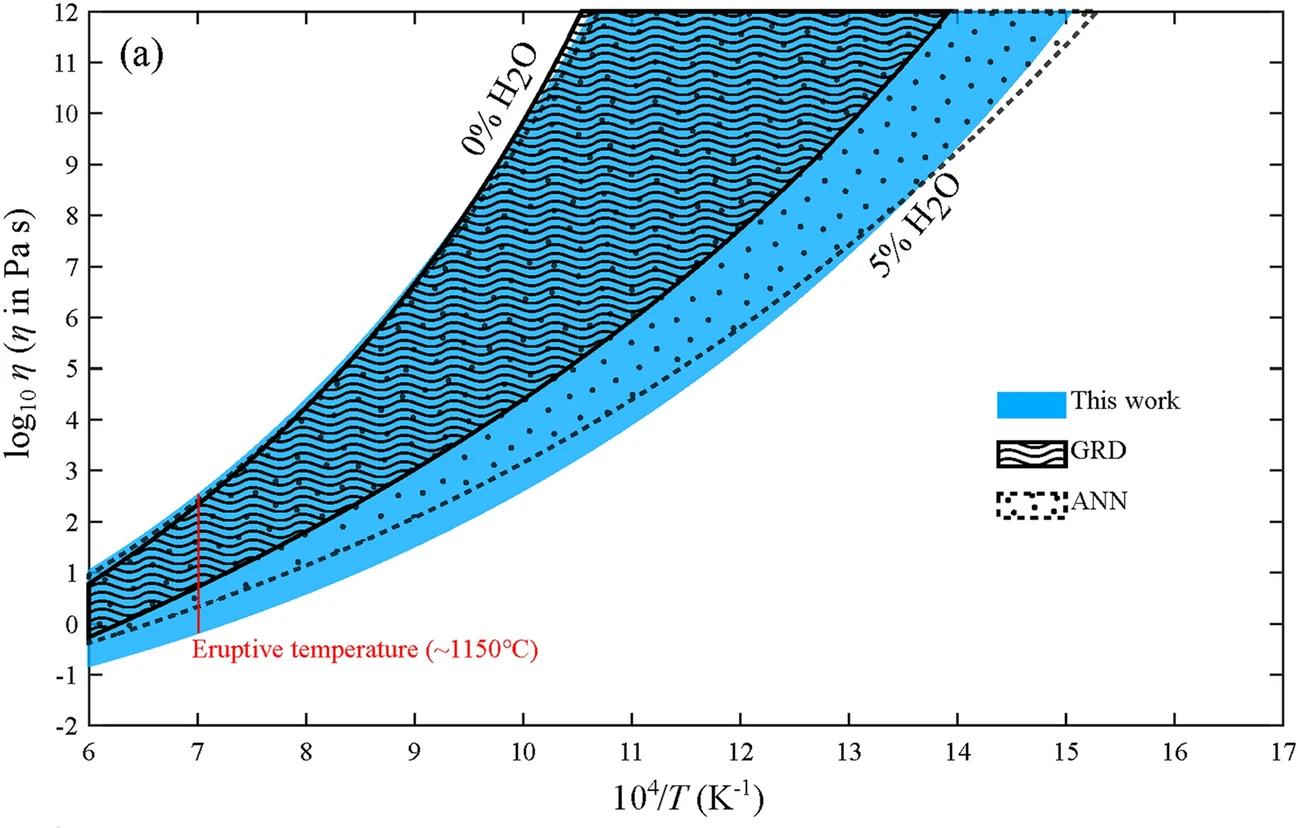
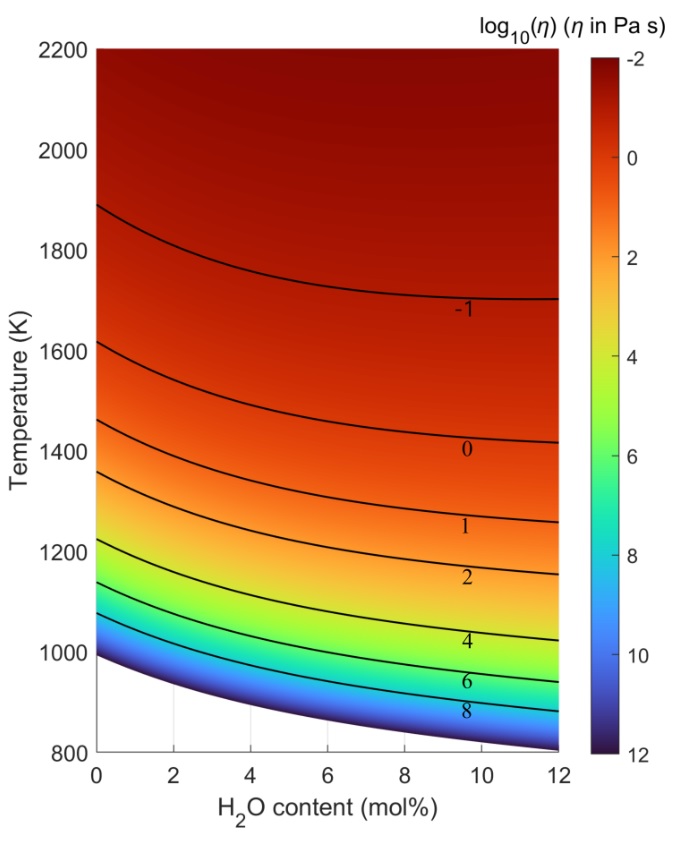
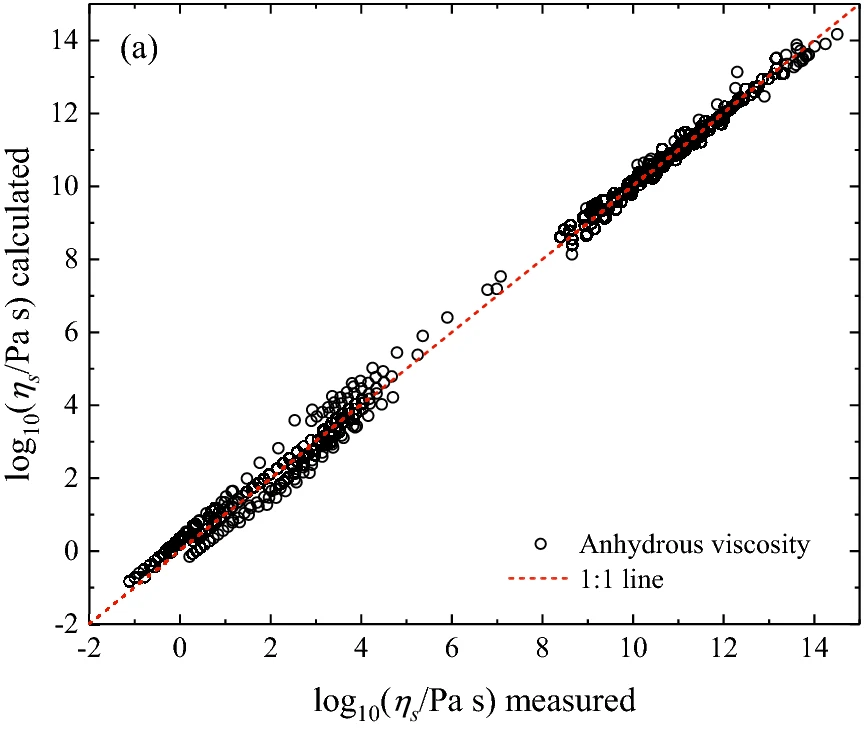
In our new study, Di Genova et al. 2023 Chemical Geology, we report the first viscosity data of hydrous peridotite melts. Together with new anhydrous data, our study provides the largest and most comprehensive viscosity dataset over a broad chemical landscape and oxidation state. We provide a new viscosity model developed for the temperature- and water-dependent viscosity of peridotite melts (up to 12 mol% water content). We provide a viscosity calculator.
Viscosity of anhydrous and hydrous peridotite melts
The melt viscosity (η) of anhydrous and hydrous peridotite was investigated using a multipronged approach combining micropenetration viscometry, conventional DSC, flash DSC and Brillouin spectroscopy. Raman spectroscopy measurements were used to verify the absence of crystallization and/or degassing during high-temperature measurements of these extremely reactive glasses and melts, ensuring that the data corresponded to the crystal-free melt viscosity.
February 2023. Free to publish with Glass Europe: a new cost-free, peer-reviewed and open-access journal.
I am very excited to announce that I started my new role as an Associate Editor of Glass Europe, the cost-free, peer-reviewed, open-access journal, built by the community of European glass scientists and glass technologists. Glass Europe publishes results of original research, as well as reviews and perspective articles. Potential topics include – but are not limited to – physics, chemistry, properties, structure, applications, sustainability, forming, recycling, quality and history of glasses, glass-ceramics and melts. The main objective of this international open-access journal is to provide a cost-free, easy-to-operate and timely-publishing service, for high-quality novel research and technological developments in glass. Glass Europe is published by Deutsche Glastechnische Gesellschaft e.V. (DGG) and Union pour la Science et la Technologie Verrières (USTV).
Glass Europe Journal
Glass Europe is a free to publish, free to read, peer-reviewed, worlwide open access journal built by the community of European glass scientists and glass technologists, committed to timely-publishing service.
January 2023. From micro to macro: how tiny crystals influence volcanic activity. Link in Italiano.
Nature Italy interviews the authors of our work on basaltic magmas from the volcanoes Stromboli and Etna.
From micro to macro: how tiny crystals influence volcanic activity
The different eruption behaviour of Etna and Stromboli could be linked to the nanocrystals in their magma, a study suggests.
December 2022. A chemical threshold controls volcanism at Mt Etna and Stromboli volcanoes. Link.
Uno studio, coordinato dall’Istituto di geologia ambientale e geoingegneria del Consiglio nazionale delle ricerche (Cnr-Igag) e dall’Università degli Studi Roma Tre e pubblicato su Nature Communications Earth & Environment, descrive come la formazione di nanocristalli (anche detti nanoliti, fino a 10.000 volte più piccoli di un capello umano) in magmi basaltici, possa essere indotta da minime differenze composizionali, in particolare, un più alto contenuto in metalli come titanio e ferro.
Etna e Stromboli, nuova luce su possibili cause di eruzioni esplosive
Combinando vulcanologia e geochimica, uno studio di un team internazionale - coordinato dall’Istituto di geologia ambientale e geoingegneria del Consiglio nazionale delle ricerche e dall’Università degli Studi Roma Tre e pubblicato su Nature Communications Earth & Environment - mette in luce le differenze composizionali di magmi basaltici che stanno alla base del diverso comportamento eruttivo di Etna e Stromboli e individua i fattori che potrebbero essere causa di eruzioni vulcaniche esplosive.
November 2022. An artificial neural network viscosity model of volcanic melts. Calculator here.
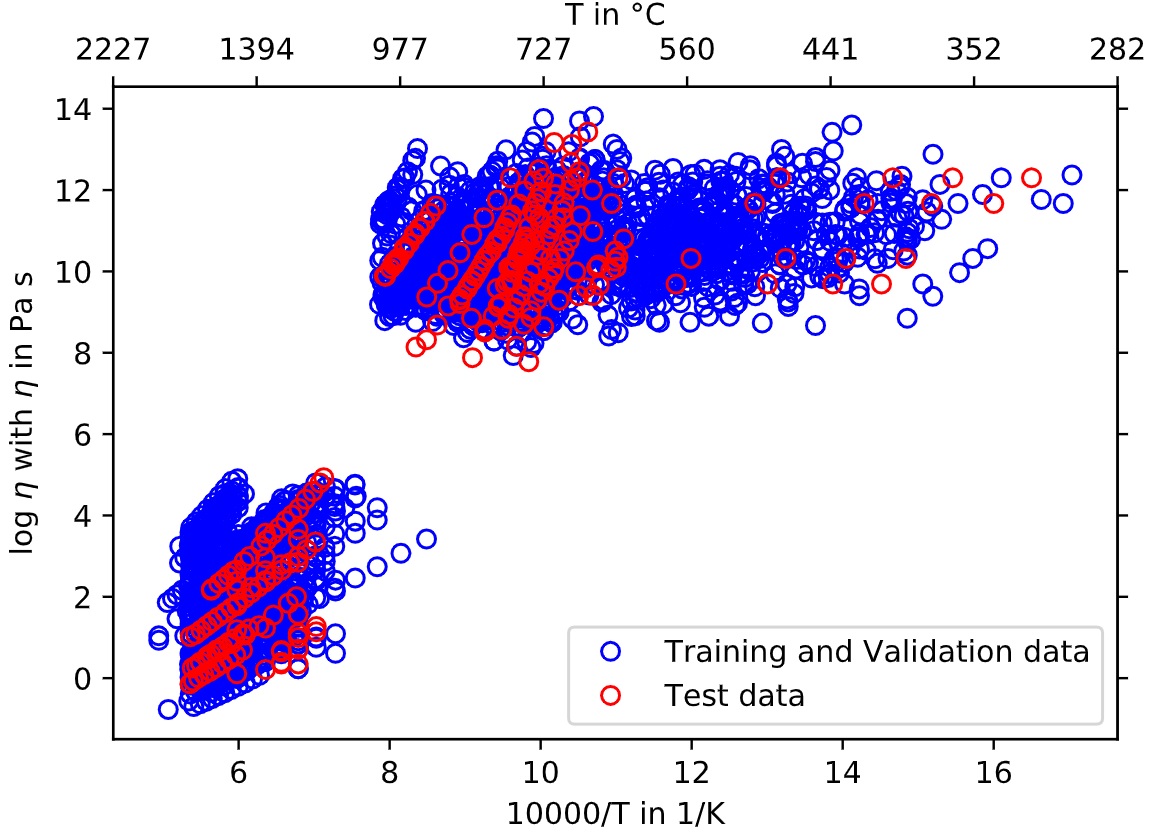
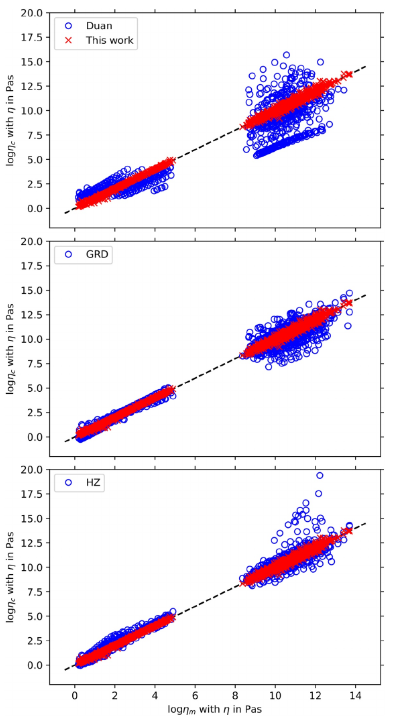
We report the first viscosity model of volcanic melts based on Artificial Neural Networks (ANN) in Langhammer et al. 2022, Geochemistry, Geophysics, Geosystems. The ANN uses composition, temperature, a structural parameter reflecting melt polymerisation and the alkaline ratio as input parameters. It successfully reproduces and predicts measurements in the database with significantly higher accuracy than previous global models for volcanic melt viscosities. A calculator based on our ANN model is available here. An Excel file to calculate viscosities using the MYEGA equation is supplied in the Supporting Information.
Modelling viscosity of volcanic melts with artificial neural networks
We train an Artificial Neural Network that calculates temperature- and composition-dependent viscosity of volcanic melts The Neural Network reproduces and predicts experimental viscosity signific...
November 2022. A chemical threshold controls volcanism at Mt Etna and Stromboli volcanoes.
In Scarani et al. 2022, Nature Communications Earth & Environment our team from Rome, Bayreuth, Orléans and Clausthal have demonstrated the role of total iron and titanium content for the formation of nanosized crystals in magmas at eruptive conditions, relating these observations to the occurrence of explosive events at basaltic volcanoes such as Mt. Etna and Stromboli in Italy.
A chemical threshold controls nanocrystallization and degassing behaviour in basalt magmas.
Nanocrystallization in experiments on basalt melts and glasses from Mt. Etna and Stromboli is mainly triggered by undercooling-driven oversaturation in TiO2 and FeO, which could bias viscosity measurements and affect magma dynamics during decompression.
October 2022. Alfred Rittmann 2022 medal.
The Italian Volcanology Association awarded me the 2022 Alfred Rittmann medal. I thank the president and board of the Italian Volcanology Association. I am truly grateful to be the recipient of the Rittmann Medal and hope that my contributions can still pay tribute to this medal.
La Medaglia Rittmann 2022 conferita a Danilo Di Genova (Cnr-Igag) | Consiglio Nazionale delle Ricerche
Nell’ambito dell’assemblea dei soci dell’Associazione Italiana di Vulcanologia è stata conferita la Medaglia Rittmann. La Medaglia Rittmann onora la memoria di Alfred Rittmann (1893-1980), studioso illuminato che dedicò gran parte della sua vita allo studio dei vulcani italiani. Il riconoscimento viene assegnato a uno studioso brillante che abbia conseguito il titolo di Dottore di Ricerca da non più di 12 anni e che abbia contribuito in maniera originale ed innovativa all’avanzamento delle conoscenze vulcanologiche.
September 2022. Invited talk at ISTO and CEMHTI, France.
At the Institut des Sciences de la Terre d’Orléans (ISTO) and Conditions Extrêmes et Matériaux: Haute Température et Irradiation (CEMHTI) in France, we discussed the formation of nanocrystals in magmas and how we can study the process by combining experimental volcanology and materials science. I thank you for the invitation and look forward to working with you.
July 2022. Keynote at Goldschmidt Conference, Hawaii.
During the Goldschmidt conference, we discussed challenges in experimental volcanology, how these may impact our knowledge and eventually how to move forward. Thanks to the conveners for the invitation and all speakers for their interesting presentations.
Nanocrystals formation, the elephant in the laboratory
Nanocrystals are recently discovered components in magmas and silicate melts used as analogues of volcanic melts in the laboratory. While their origin in magmas has yet to be resolved, recent experiments have shown that their formation can increase the melt viscosity and trigger the nucleation of a high number density of bubbles. These two processes are known to be decisive in the eruptive style transition.
June 2022. Invited talk at the University of Camerino, Italy.
At the University of Camerino, we discussed collaborations in volcanology and materials science. Thank you for the invitation and I am looking forward to working with you.
Di-Genova_Uni-Camerino-2022
June 2022. Invited talk at the Ludwig Maximilian University of Munich, Germany.
At LMU’s Department of Earth and Environmental Sciences, we discussed new perspectives on experimental volcanology. It was nice to come back after a few years.
June 2022. Viscosity of volcanic melts: A global model
We report the first viscosity model of volcanic melts based on Artificial Neural Networks (ANN) in Langhammer et al. Preprint. The ANN uses composition, temperature, a structural parameter reflecting melt polymerisation and the alkaline ratio as input parameters. It successfully reproduces and predicts measurements in the database with significantly higher accuracy than previous global models for volcanic melt viscosities. A calculator based on our ANN model is available here. An Excel file to calculate viscosities using the MYEGA equation is supplied in the Supporting Information.
Modelling Viscosity of Volcanic Melts with Artificial Neural Networks
Viscosity is of great importance in governing the dynamics of volcanoes, including their eruptive style. The viscosity of a volcanic melt is dominated by temperature and chemical composition, both oxides and water content.
May 2022. Dendritic crystallization in hydrous basaltic magmas
With Arzilli et al. 2022, Nature communications, we present the first in-situ 3D time-series of crystal growth in high-temperature experiments under water-saturated conditions at crustal pressures. This new 4D approach provides unique quantitative information on the growth kinetics and textural evolution of pyroxene crystallization in basaltic magmas. Our results provide new insights into the processes controlling which intrusions lead to eruption, and which do not.
Dendritic crystallization in hydrous basaltic magmas controls magma mobility within the Earth’s crust
In situ 4D experiments at high temperature and moderate pressure reveal that rapid dendritic crystallization in hydrous basaltic magmas promotes a rheological transition within minutes, controlling magma mobility within the Earth’s crust.
March 2022. ERC Consolidator Grant (2021) “NANOVOLC – Nanoscale dynamics of volcanic processes: Experimental insights and numerical simulations of explosive eruptions”
I have been awarded an ERC research consolidator grant for my project “NANOVOLC – Nanoscale dynamics of volcanic processes: Experimental insights and numerical simulations of explosive eruptions”. NANOVOLC will investigate the molecular and elusive failure of magma through a combination of field observations at active volcanoes, experimental volcanology and petrology, construction of new HT-HP apparatus, synchrotron light source and artificial intelligence. This was made possible through the support and cooperation between the universities of Bayreuth, Bristol, Manchester and TU-Clausthal, and the ESRF and DLS synchrotrons.
NANOVOLC
NANOscale dynamics of VOLCanic processes: Experimental insights and numerical simulations of explosive eruptions
January 2022. Determination of cooling rates of glasses over four orders of magnitude.
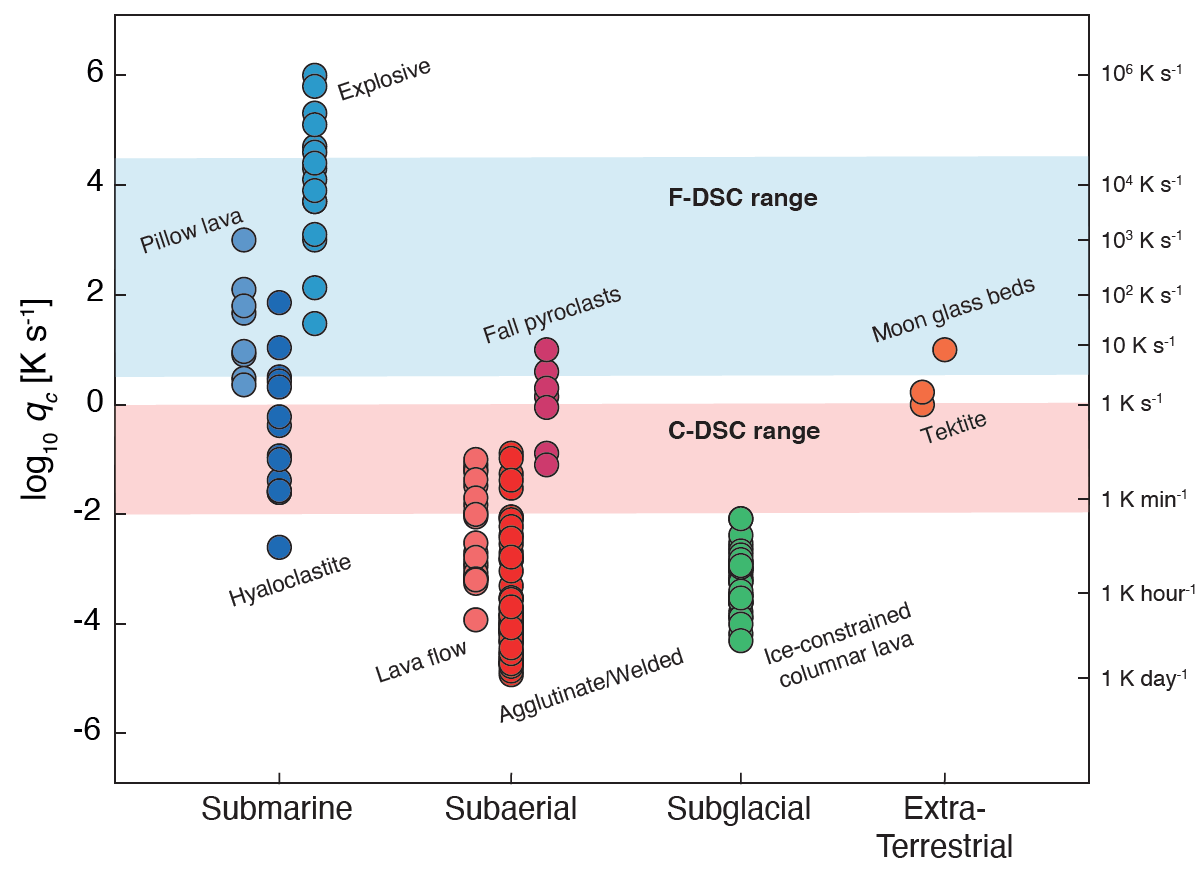
In Scarani et al. 2020, Contributions to Mineralogy and Petrology, we present a series of Differential Scanning Calorimetry experiments designed to parameterize the cooling rate – fictive temperature relationship of glass-forming melts. For the first time, we use flash calorimetry to access unprecedented cooling rates up to 104 K s-1. We present a normalization procedure and provide a step-by-step “how-to” guide that allows the derivation of the cooling rate embedded in glasses. Our work has also implications for the study of melts prone to rapid (nano)crystallization and dehydration.
Determination of cooling rates of glasses over four orders of magnitude
Volcanic materials can experience up to eleven orders of magnitude of cooling rate starting from 10^–5 K s^−1. The glassy component of volcanic material is routinely measured via differential scanning calorimeter to obtain the cooling rate through the determination of the glass fictive temperature.
December 2021. Rapid-quenching of high-pressure depolymerized hydrous silicate (peridotitic) glasses.
In Bondar et al. 2022, Journal of Non-Crystalline Solids, we report the first successful quenching, recovery, and characterization of high-pressure hydrous silicate glasses of peridotite composition, with H2O contents from 0 to 5 wt%, using a large-volume high-pressure apparatus equipped with a novel rapid-quench cell. Our study provides fertile ground for developing new studies of the structure and properties relationship of extremely depolymerized melts.
Rapid-quenching of high-pressure depolymerized hydrous silicate (peridotitic) glasses
Experimental and spectroscopic investigation of glasses synthesized at high pressure provides fundamental information about the structure/physical properties relationships of these materials.
November 2021. The glass transition and the non-Arrhenian viscosity of carbonate melts.
We report the first calorimetric observation of the glass transition for a carbonate melt in Dingwell et al. 2022, American Mineralogist. Viscosities just above the glass transition temperature were obtained by applying a shift factor to the calorimetric results. These viscosity measurements at supercooled temperatures, dramatically extend the temperature range of data for carbonates which were previously restricted to superliquidus viscosities.
The glass transition and the non-Arrhenian viscosity of carbonate melts
September 2021. Modeling the viscosity of anhydrous and hydrous volcanic melts.
Our efforts towards understanding the viscosity of volcanic melts and magmas continue with Langhammer et al. 2021, Geochemistry, Geophysics, Geosystem. In this paper we present a new physical formulation of the viscosity of volcanic melts and magmas, together with a strategy for quantifying the chemical and physical effect of nanometer crystals on viscosity.
Modeling the Viscosity of Anhydrous and Hydrous Volcanic Melts
We provide a temperature- and water-dependent viscosity model for volcanic melts that performs better or comparable to literature models.
July 2021. Diamond Light Source annual review.
Our study on the nanoscale dynamics of magma (Di Genova et al. 2020, Science Advances) was included in the list of studies for the annual review of DLS synchrotron. Once again, we thank DLS for the extraordinary support and we look forward to visiting the laboratories.
A nanoscale perspective of explosive volcanic eruptions
Diamond Annual Review 2020/21
July 2021. Research and Funding Opportunities in Geochemistry in Germany.
Joining the “Research in Germany” Information Session at Goldschmidt conference organized by Alexander von Humboldt Foundation, the German Academic Exchange Service and the German Research Foundation.
Research in Germany
Are you interested in doing your PhD in Germany? Are you looking for a way to fund your postdoc position, individual research project or even an independent working group at a German research institution? Or do you want to learn more about the German research landscape in general?
June 2021. Estimating the viscosity of volcanic melts.
We present an alternative route to derive the viscosity of volcanic melts based on the vibrational properties of their parental glasses. This enables the accurate quantification of the effect of nanocrystal formation on magma viscosity and therefore the eruptive dynamics of volcanoes.
Results and implications are presented in Cassetta et al. 2021, Scientific Reports.
Estimating the viscosity of volcanic melts from the vibrational properties of their parental glasses
The numerical modelling of magma transport and volcanic eruptions requires accurate knowledge of the viscosity of magmatic liquids as a function of temperature and melt composition. However, there is growing evidence that volcanic melts can be prone to nanoscale modification and crystallization before and during viscosity measurements.
June 2021. A Burp or a Blast? Robin George Andrews writes also of “nanoscopic nuisances” influencing magma viscosity.
Quanta magazine focuses on basaltic volcanism. The article acknowledges also the contribution from our collaborative network, Di Genova et al. 2020, Science Advances.
Seismic Data Helps Scientists Forecast Volcanic Explosions | Quanta Magazine
Scientists have begun to decipher the subtle signs that reveal how explosive a volcanic eruption is going to be.
May 2021. In situ quantification of crystallisation kinetics in basaltic magma: Implications for lava flow.
We performed real-time, in situ synchrotron X-ray microtomography, studying the influence of temperature-time paths on the nucleation and growth of clinopyroxene and plagioclase in basaltic magma.
Results and implications are presented in Le Gall et al. 2021, Earth and Planetary Science Letters.
In situ quantification of crystallisation kinetics of plagioclase and clinopyroxene in basaltic magma: Implications for lava flow.
Crystallisation is a complex process that significantly affects the rheology of magma, and thus the flow dynamics during a volcanic eruption. For exam…
April 2021. News & Views.
Nature Geoscience focuses on explosive volcanic eruptions fed by low-viscosity magmas. This News & Views communication acknowledges also two contributions from our collaborative network, Arzilli et al. 2019, Nature Geoscience and Di Genova et al. 2020, Science Advances.
Magma behaving brittly
Low viscosities may not preclude brittle magma fragmentation under certain conditions, according to field observations and experimental evidence that suggest the conditions for brittle fragmentation may be met in many explosive mafic eruptions.
January 2021. A nanoscale perspective of volcanic eruptions.
This article authored by Harini Barath was originally published with the title “Crystal Power” in Scientific American 324, 1, 17 (January 2021).
‘Nanolites’ Can Trigger Dangerous Volcanic Explosions
Tiny crystals play a big role in unexpectedly violent eruptions
January 2021. The effect of iron and alkali on the nanocrystal-free viscosity of volcanic melts.
We combined Raman spectroscopy and DSC to retrieve the viscosity of nanocrystal-free rhyolites. The viscosity can increase up to 3 log units with changing Fe2+/Fetot and Na/(Na+K). This has important implications for the eruptive dynamics of rhyolitic magmas.
Results and implications are presented in Stabile et al. 2021, Chemical Geology.
The effect of iron and alkali on the nanocrystal-free viscosity of volcanic melts: A combined Raman spectroscopy and DSC study
The iron coordination, its oxidation state (Fe2+/Fetot.), and alkali ratio [Na/(Na+K)] greatly influence the structure and thus the viscosity of volcanic melts, which is known to play a key role in the dynamics of volcanic eruptions.
December 2020. On the transitions in the eruptive style of basaltic volcanism.
A new study constrains the combined effect of magma rheology, ascent rate and outgassing on basaltic eruption style. We focused on Kilauea and Mt. Etna volcanoes.
Results and implications are presented in La Spina et al. 2021, Earth and Planetary Science Letters.
Explosivity of basaltic lava fountains is controlled by magma rheology, ascent rate and outgassing
The dichotomy between explosive volcanic eruptions, which produce pyroclasts, and effusive eruptions, which produce lava, is defined by the presence or absence of fragmentation during magma ascent.
The study, published in Science Advances, describes how nano-sized crystals (nanolites), 10,000 times smaller than the width of a human hair, can have a significant impact of the viscosity of erupting magma, resulting in previously unexplained and explosive eruptions.
Scientists shine light on tiny crystals behind unexpected violent eruptions
In a new study of volcanic processes, scientists have demonstrated the role nanolites play in the creation of violent eruptions at otherwise ‘calm’ and predictable volcanoes.
L’eruzione più distruttiva della storia dell’Etna
Nel 122 a.C. il più grande tra i vulcani europei, il gigante tranquillo dei vulcani, si esibì in una distruttiva eruzione pliniana: oggi sappiamo perché.
Il mistero delle Eruzioni Vulcaniche Esplosive sono i Nanocristalli
I minuscoli cristalli si accumulano nel magma, rendendo difficile il rilascio dei gas e spingendo la pressione a salire fino al punto in cui si verifica un’esplosione devastante.
August 2019 – March 2020. Exploring and unravelling the effect of nano-heterogeneity on the viscosity of technical and volcanic silicate melts.
We present a multi-pronged approach to demonstrate how the emergence of nano-heterogeneities exerts a previously unexplored influence on the viscosity of multicomponent silicate melts.
Results and implications are presented in Di Genova et al. 2020, Journal of Non-Crystalline Solids.
February 2018 – January 2020. Studying the effect of nanocrystal formation on magma viscosity and dynamics of volcanic eruptions.
Based on experimental evidence and building on hypotheses presented in 1) peer-reviewed studies 14, 20 and 27, 2) preliminary resutls included in scientific proposals for synchrotron radiation-based studies between 2018 and 2019, 3) submitted and unpublished study in 2018, and together with R. A. Brooker, H. Mader, and J. W. E. Drewitt (University of Bristol, UK), the following synchrotron radiation-based in situ studies, focused on exploring the dynamics of nanolite formation and growth in volcanic melts, were carried out:
- In situ study of crystallisation in molten iron silicate (proposal EE17615-1, Principal Investigators D. Di Genova and R. Brooker). February 2018, Diamond Light Source (DLS), UK. See the gallery below for more details.
- In situ study of nano- and micro-crystallisation in volcanic melt under different fO2 (proposal ES 793, Principal Investigator D. Di Genova). September 2018, European Synchrotron Radiation Facility (ESRF), France. See the gallery below for more details.
- In situ observation of incipient crystallisation of volcanic melts (proposal SM20447-1, Principal Investigators D. Di Genova and R. Brooker). February 2019, Diamond Light Source (DLS), UK. See the gallery below for more details.
These studies were conducted with scientific and/or experimental support of (in alphabetic order):
- Anzellini (DLS, UK), F. Arzilli and E. C. Bamber (University of Manchester, UK), J. Deubener (Technical University of Clausthal, Germany), S. Fanara (University of Göttingen, Germany), L. Hennet (CEMHTI-CNRS, France), A. Longo (ESRF, France), D. R. Neuville (IPGP, France), O. Shebanova (DLS, UK), G. La Spina (University of Manchester, UK).
Afterwards, to study the effect of formation, volume and size of nanolites on the rheology of magmas and, eventually, on the style of volcanic eruptions, in collaboration with J. Deubener (Technical University of Clausthal, Germany) and Nobuyoshi Miyajima (Bayerisches Geoinstitut, Germany), I carried out:
- Viscosity measurements of magma analogues and volcanic melts.
- In situ study of volcanic melts degassing.
Results and implications are presented in Di Genova et al. 2020, Science Advances.
Scientists shine light on tiny crystals behind unexpected violent eruptions.
03_ESRF_Sept.2018_DiGenova
2015 – June 2020. Quantifying microstructural evolution in moving magma.
We present experimental apparatus and analytical toolkit for the in situ X-ray tomography based quantification of magmatic microstructural evolution during rheological testing. We present the first 3D data showing the evolving textural heterogeneity within a shearing magma, highlighting the dynamic changes to microstructure that occur from the initiation of shear, and the variability of the microstructural response to that shear as deformation progresses.
Details of experimental apparatus, results and implications are presented in Dobson et al. 2020, Frontiers in Earth Science.
July – December 2019. Flash Differential Scanning Calorimetry (Flash DSC), Clausthal University of Technology, Germany.
We present the first FDSC measurements with heating and cooling rates up to 3 × 10⁵ K min-1 of glass-forming systems prone to crystallization. We provide a universal shift factor to retrieve the viscosity of silicate and fluorophosphate melts from ~106 up to ~1012 Pa s without the need of performing viscosity measurements.
Results and implications are presented in Al-Mukadam et al. 2020, Journal of Non-Crystalline Solids.
FDSC GLASS laboratory CNR ISSMC Rome
September 2019. SIMP-SGI-SOGEI conference, Parma, Italy.
Keynote “Volcanic eruptions: a nanoscale perspective” at the session “Experimental and theoretical studies of magmatic processes“. Conveners and Chairpersons Michael R. Carroll (University of Camerino, Italy), Fabio Arzilli (University of Manchester, UK), Paola Stabile (University of Camerino, Italy).
Logo_SIMP-SGI-SOGEI_Parma-2019
July 2019. Clausthal University of Technology, Germany.
When experimental volcanologists and materials scientists meet each other: hosting Dr Alessandro Vona and Alex Scarani (PhD candidate) from the Experimental Volcanology and Petrology Laboratory (University of Roma Tre, Italy) at the Institute of Non-Metallic Materials, Clausthal University of Technology.
Dr-Alessandro-Vona-lecture-on-Stromboli-eruption-2019
February 2019. Diamond Light Source (DLS), UK.
I22 beamline: Small and Wide Angle X-ray Scattering (SAXS and WAXS). Link to I22.
In situ observation of incipient crystallisation of volcanic melts.
Proposal SM20447-1 [Principal Investigators Danilo Di Genova and Dr Richard Brooker (University of Bristol, UK)].
Simultaneous in situ acquisition of both SAXS and WAXS from volcanic melts at high temperature during crystallisation in order to probe the melt structure.
Results of our scientific campaign are the object of a study entitled “In situ observation of nanolite growth in volcanic melt: a driving force for explosive eruptions” Di Genova et al. 2020, Science Advances.
Scientists shine light on tiny crystals behind unexpected violent eruptions.
September 2018. European Synchrotron Radiation Facility (ESRF), France.
BM26 – DUBBLE – DUTCH-BELGIAN BEAMLINE beamline: Small and Wide Angle X-ray Scattering (SAXS and WAXS) and X-ray Absorption Fine Structure Spectroscopy (XAFS). Link to BM26.
In situ study of nano- and micro-crystallisation in volcanic melt under different fO2.
Proposal ES 793 (Principal Investigator Danilo Di Genova).
Simultaneous in situ acquisition of SAXS, WAXS and XAFS from volcanic melts at high temperature during crystallisation in order to probe the melt structure and iron oxidation state.
Results of our scientific campaign are the object of a study entitled “In situ observation of nanolite growth in volcanic melt: a driving force for explosive eruptions” Di Genova et al. 2020, Science Advances.
Scientists shine light on tiny crystals behind unexpected violent eruptions.
02_ESRF_Sept.2018_DiGenova
February 2018. Diamond Light Source (DLS), UK.
I15 beamline: X-ray diffraction (XRD). Link to I15.
In situ study of crystallisation in molten iron silicate.
Proposal EE17615-1 [Principal Investigators Danilo Di Genova and Dr Richard Brooker (University of Bristol, UK)].
In situ acquisition of XRD from volcanic melts at high temperature during crystallisation in order to explore the timescale of crystal nucleation.
Results of our scientific campaign are the object of a study entitled “In situ observation of nanolite growth in volcanic melt: a driving force for explosive eruptions” Di Genova et al. 2020, Science Advances.
Scientists shine light on tiny crystals behind unexpected violent eruptions.
January, September and November 2018. Diamond Light Source (DLS), UK.
Under the framework of the NERC/NSF Large Grant on “Quantifying Disequilibrium Processes in Basaltic Volcanism” (PI Prof Mike Burton, University of Manchester).
I12 beamline: Time-resolved tomography. Link to I12.
Intermediate-pressure, fugacity controlled crystallisation of basaltic magmas.
Proposal EE20384-1 (Principal Investigator Prof Peter Lee, University College London).
Degassing processes under pressure in basaltic volcanism.
Proposal EE19499-1 (Principal Investigator Prof Mike Burton, University of Manchester).
Capturing the crystallisation of basaltic magmas under controlled redox and thermal conditions.
Proposal EE18204-1 (Principal Investigator Prof Mike Burton, University of Manchester).
Crystallisation kinetics of basaltic magmas in 4D.
Proposal EE12392-2 (Principal Investigator Prof Mike Burton, University of Manchester).
Results published in Polacci et al. 2018, Scientific Reports and Arzilli et al. 2019, Nature Geoscience.